
Why the Smallest Automatic Can-Seamer Matters for Start-Ups
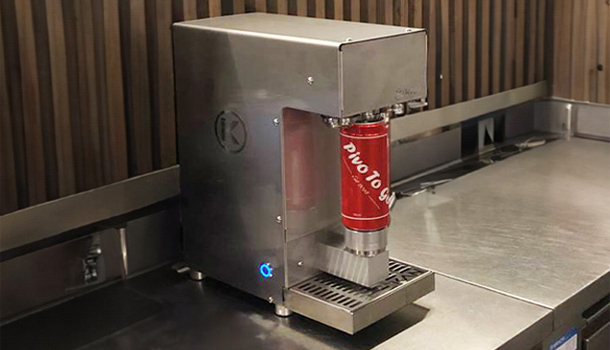
If you’re launching a beverage or canned-food brand, every decision carries weight—space, budget, flexibility, speed to market. That’s why compact, capable equipment like the iKAN automatic can-seamer from Eazy Canning can be a real game-changer for start-ups. In this article we’ll explore why the “smallest automatic can-seamer” matters, how it supports business growth, and what you should ask when choosing one.
1. The Start-Up Production Dilemma
When you’re just getting off the ground in the beverage or canned-food space, you often face three conflicting constraints:
- Low budget: You need to keep initial capital investment minimal to reduce risk.
- Limited space: Your facility, taproom, kitchen or production room might be small.
- Need for quality & scalability: You want professional-looking packaging, consistent sealing, and the ability to grow.
Traditional full-scale canning lines are huge, expensive, and often overkill for a start-up producing a few hundred to a few thousand cans. They might be designed for tens of thousands per hour, require mounting, large footprint, complex utilities—and carry big financial and maintenance burdens.
That’s where a compact automatic seamer like the iKAN comes in.
2. What the iKAN Offers for Small Producers
Let’s review some of the key specifications and how they align with start-up needs:
- Capacity: up to 10 cans per minute.
- Supported can sizes: from 200 ml to 1000 ml.
- Weight: just 18 kg and dimensions 44 × 18 × 35 cm (H × W × D) — extremely compact.
- Materials: Food-grade stainless steel and aluminum, built for durability.
- Portable: No permanent mounting required, ideal for small spaces or shared facilities.
- Affordable entry price: Purchase around EUR 3,280; leasing options start at ~EUR 100/month.
In short: The iKAN bridges the gap between hand-seaming/manual methods and huge industrial lines. It gives start-ups access to automatic sealing (which improves consistency and professional quality) in a package that’s affordable, small, and flexible.
3. Why Seaming Matters and Why Automatic Matters
3.1 Seaming matters
Whether you’re packaging beer, coffee, juice, cocktails, or canned foods, the integrity of the seam—the closure between the can body and lid—is critical for:
- Preventing leaks or contamination
- Maintaining carbonation (for fizzy beverages)
- Ensuring shelf life and product stability
- Protecting brand reputation (a leaking can = unhappy customer)
A high-quality seamed can is part of your product-quality promise.
3.2 Automatic vs manual / semi-automatic
- Manual seaming tools may work for very low volumes, but they rely on operator skill, are slower, and yield more variation.
- Semi-automatic reduces some labour but still may have limitations in throughput or consistency.
- Fully automatic (even compact) brings several advantages: consistent seam quality, less operator variation, faster production, better repeatability.
For a start-up, using a machine like the iKAN means you raise the bar on packaging quality without jumping into high-risk investment or large footprint—thus helping you build credibility from day one.
4. Start-Up Benefits of a Small Automatic Can Seamer
4.1 Lower upfront investment
Instead of laying out tens or hundreds of thousands of euros on a full line, you invest a modest amount and get automatic seaming capability. This reduces entry risk, helps cash flow, and lets you validate your product-market fit before scaling.
4.2 Flexibility & space savings
Because the iKAN is only 44 × 18 × 35 cm and weighs 18 kg, you’re not locked into a large dedicated room. You can use existing space, production can be integrated into your taproom, café, small kitchen, or shared facility. Also it allows you to pivot quickly (change can sizes, products, production runs) without the rigidity of huge lines.
4.3 Faster speed to market
With an automatic seamer you can move from concept to packaged product quicker. The simple setup and intuitive operation (one of the advantages of iKAN) mean you don’t need lots of engineering or long commissioning. That means your first canned SKU can hit shelves or events faster—essential for start-ups hunting traction.
4.4 Scalability & professional appearance
Even though you’re small, you’re using equipment that looks professional. That builds brand confidence with customers, distributors and retailers. And the iKAN supports up to 1000 ml cans, and 10 cans/min, so when you grow you’re not immediately obsolete—you have headroom to evolve.
4.5 Risk mitigation
By choosing a compact, lower-cost seamer, you minimise risk of idle capacity, expensive downtime, or big maintenance burdens. If your volumes fluctuate (as early stage businesses often do), you’ve got a flexible solution that won’t eat your margins.
5. How to Make It Work in Your Start-Up Environment
To get the most from the iKAN (or any compact automatic seamer), consider these best-practice tips:
5.1 Workflow and space planning
- Position the machine near your filling station so sealed cans move directly into labeling/packing.
- Ensure adequate utilities: simple 230 V, 50 Hz, ~90 W power consumption for the iKAN.
- Maintain a clean and sanitary area — even though small, you’re producing packaged product for the market, so hygiene matters.
- Plan for operator movement, change-overs of can sizes (200ml to 1000ml) and ease of cleaning.
5.2 Choose compatible can specs
- The iKAN supports 200 ml to 1000 ml cans. Decide which sizes your target market demands (e.g., craft 330ml, 500ml tall, or even 1000ml).
- Check supply and logistics for the can sizes, lids, and ensure your label/brand packaging integrates well.
5.3 Staff training & quality monitoring
- Even an automatic machine needs attentive operators: set the machine correctly, monitor seams, check first canouts for defects.
- Inspect the sealed cans periodically—look for seam height, dimensional consistency, leaks.
- Implement a quality checklist (first 10 cans each run, then every hour, end of production).
5.4 Maintenance & uptime
- Although the iKAN is described as having maintenance-free seaming heads capable of some millions of cycles, you’ll still want to check periodically.
- Clean the machine daily (or after each product run) to prevent buildup, contamination or metal wear.
- Keep spare parts (chucks & rolls) if your can size changes frequently.
5.5 Leveraging it for growth
- Use the compact nature of the iKAN to launch special editions, limited runs or tasting cans without huge capital risk.
- Track your throughput, cost per sealed can, labour cost, downtime—so you can plan when you’ll need to upgrade to higher throughput or add more machines.
- Use your early packaging professionally to build brand credibility so you can scale into a larger line when the time is right.
6. Tips for Getting Started with Your Compact Automatic Seamer
- Define your product and size range: Decide which can sizes you’ll launch with (e.g., 330 ml or 500 ml) and verify the seamer supports them.
- Map your workflow: From can supply → filling → seaming → labeling → packing. The seamer is one part—optimise the whole line.
- Budget realistically: Include not only equipment cost (~EUR 3,280) but also cans, lids, labels, operator training, electrical/utility setup.
- Train your team: Even if it’s a small team, ensure operators understand seaming quality, basic maintenance, change-overs.
- Implement quality controls: For each run, check first-10 cans for seam integrity, periodically pull random samples for leaks.
- Monitor cost per can sealed: This helps you track profitability and know when to scale up.
- Plan for growth: Use your compact seamer as a stepping stone. When volume grows, you can deploy a second unit, or upgrade to higher throughput seamer—but early success and data will guide that decision.
Why It Matters
For start-ups in the beverage or canned-food industry, every dollar, every square metre of space, every day to market matters. Choosing a machine like the iKAN means you don’t have to compromise on quality or professionalism just because you’re small. You get:
- A cost-effective investment that fits start-up budgets.
- A space-saving footprint, ideal for cafés, taprooms, shared kitchens, or small production rooms.
- A versatile, professional automatic seamer that supports growth, different can sizes, and higher quality packaging.
- The ability to launch quickly, test your market, iterate, and scale when you’re ready—not before.
If you’re a new beverage or canned-food brand looking to step into canning, choosing the right seamer is a strategic move—and one you don’t want to overpay for or oversize for before you’ve validated your market. The iKAN offers a compelling option that aligns with start-up realities.

Leave a Reply