
How to Expand Your Beverage Product Line Without Investing in High-Volume Equipment
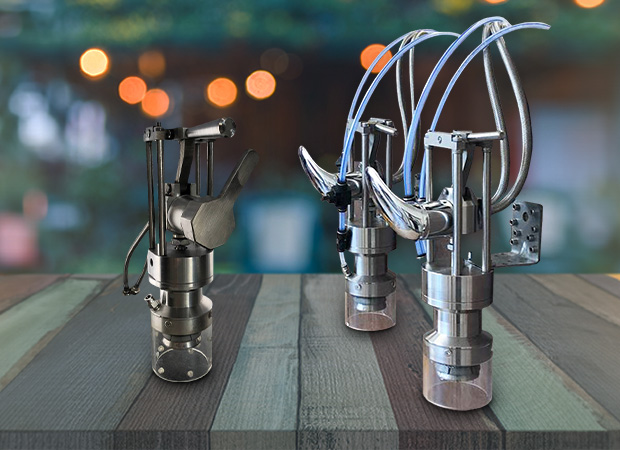
For many small and medium-scale beverage producers — whether you run a microbrewery, cold-brew coffee shop, kombucha line, or a restaurant offering ready-to-drink cocktails — growth and innovation often mean expanding your product line. But “expansion” doesn’t always have to mean huge capital investments into big, industrial canning lines. With the right strategy and compact equipment, you can increase variety, test new flavors, and respond to market demand — all while keeping costs manageable.
FENIX and iKAN are designed precisely for this kind of flexible, small-batch scale-up. Their design and capabilities make them well-suited for producers who want to experiment, scale smartly, and maintain quality without overextending capital.
In this article, we’ll explore how to grow your product line wisely using manual (or semi-manual) equipment: the advantages, tactics, challenges, and practical recommendations from Eazy Canning’s own machine features.
Why Manual/Semi-Manual Can Filling & Seaming Is a Smart Choice for Expansion
- Lower Initial Capital
- Manual systems are far more affordable than automatic high-volume lines. For example, the iKAN can seamer, designed for small/medium production, offers automatic seaming at rates (up to 10 cans/min) without the huge footprint or cost of large industrial machines.
- Because the financial barrier is lower, you can divert more of your investment into product development (ingredients, R&D, marketing) instead of just capacity.
- Flexibility & Versatility
- The iKAN seamer supports a wide range of can sizes (200 ml to 1000 ml), giving you freedom to test different can formats as you expand your line.
- The FENIX filler is designed for reverse-pressure filling, up to 4 bars of pressure, which is ideal for carbonated beverages.
- Because both machines are relatively compact and portable, they don’t commit you to one “product format.” You can run small batches of specialty drinks, limited seasonal lines, or entirely new recipes without disrupting your core production.
- Professional Quality, Without Compromise
- Eazy Canning’s machines are built with food-grade stainless steel (e.g., iKAN uses 304 stainless) to ensure hygiene, durability, and safety.
- The FENIX filler is fully CIP (Clean-In-Place) capable, meaning you can maintain high hygiene standards even when switching between different beverages.
- Quality seams matter, and the iKAN offers consistent, reliable double seams — essential for preserving carbonation, shelf-life, and product integrity.
- Scalable ROI
- As demand grows, you don’t immediately have to jump to a fully automatic line. Eazy Canning themselves argue that manual seamers save money in low-to-mid production contexts.
- According to their FAQ, you can start small and scale up later: once you hit volume thresholds, you can supplement or replace with semi-automatic or larger equipment.
- Lower operating costs (less power, less maintenance) can make manual systems more efficient per can at smaller scales.
- Control and Agility
- With manual filling and seaming, you maintain close control over each can. This is valuable for:
- Testing new flavors or recipes;
- Running limited edition or seasonal lines;
- Quickly reacting to market trends without large batch commitments.
- Because Eazy Canning’s system supports different can sizes, you can experiment with formats (e.g., slim cans for energy drinks, standard 330 ml for soda, etc.) without buying a second high-capacity line.
- With manual filling and seaming, you maintain close control over each can. This is valuable for:
Strategies to Expand Your Product Line Using Eazy Canning Equipment
Here’s a step-by-step framework to expand intelligently:
1. Start with Market Research & Product Ideation
- Analyze customer demand: What kind of new flavors or beverage types do your current customers ask for (or would they appreciate)?
- Review trends: Are there emerging beverage formats in your region (e.g., nitro cold brew, hard seltzer, functional drinks)?
- Evaluate feasibility: Can those new ideas be produced with your existing equipment (FENIX + iKAN)? Given their flexibility, many product ideas will fit.
2. Prototype and Test New Beverages
- Use small-batch runs: Since manual systems are built for flexibility, run test batches of your new beverage.
- Keep quality high: Use counter-pressure filling on the FENIX to retain carbonation or minimize dissolved oxygen for delicate products.
- Package diversity: Try different can sizes to see which format resonates best with your audience, leveraging iKAN’s compatibility with a wide range.
- Gather feedback: Use tastings, limited releases, or pilot programs to understand what customers love.
3. Optimize Your Workflow
- Hygiene & CIP: Thanks to FENIX’s CIP compatibility, you can clean between product lines efficiently.
- Seaming setup: Calibrate your iKAN for each can format and lid type. Ensure you inspect seam quality for every new format. (Eazy Canning’s blog guides cover inspection and seam-sealing best practices.)
- Log production parameters: Maintain a log of filling pressure, seam adjustments, and any issues encountered during prototyping. This helps you replicate or adjust later.
4. Manage Production Cost-Effectively
- Track your cost per can: Include raw ingredients, can cost, lids, labor, and overhead. Because your equipment is manual and compact, your fixed costs per batch can stay relatively low.
- Use leasing: Eazy Canning offers leasing options (for example, the iKAN can be leased) which can help with cash flow as you expand.
- Keep spare parts on hand: As you test more formats, having spare chucks, gaskets, and other consumables ensures you can swap quickly without downtime.
5. Scale Gradually
- Once your pilot products show strong demand, gradually increase batch sizes using the same manual setup.
- Reinvest profits: Use the incremental revenue from new lines to fund further experimentation, or to eventually buy more gear.
- Consider semi-automatic or additional filling heads: If one FENIX head is not enough, you might add a second later; or you can explore semi-automated solutions when you’re ready.
6. Brand & Go-to-Market Strategy
- Leverage the “crafted in-house” narrative: Emphasize that your new line is made with care, using portable, artisanal canning equipment — a real differentiator.
- Run limited editions: Use manual canning to launch seasonal or limited-run flavors. This makes each batch feel special and mitigates risk.
- Build direct feedback loops: Sell via taproom, café, or direct-to-consumer first. Use customer reactions to refine formulations before scaling more widely.
Challenges to Be Aware Of
While manual equipment offers major advantages, there are some challenges you should plan for:
- Throughput Limits: Manual systems are slower. Even though iKAN can seam up to 10 cans/min, this is modest compared to high-speed automated lines.
- Labor Dependency: Manual operations require trained operators. As you expand product variety, training becomes more important.
- Consistency Risks: With more SKUs, there’s a risk of variability. Rigorous processes (logbooks, calibration, QC checks) are necessary.
- Maintenance Overhead: Switching between products frequently means more cleaning, seal checks, and potential wear on parts. On the flip side, Eazy Canning’s blog offers good troubleshooting and maintenance guidelines.
- Scaling Decision Point: At some stage, if demand grows very large, manual systems may become a bottleneck. But Eazy Canning explicitly supports starting small and scaling later.
Why Eazy Canning’s Philosophy Supports This Growth Model
Eazy Canning’s mission is to empower small and medium businesses with efficient, high-quality, user-friendly canning solutions. Their equipment isn’t just about volume — it’s about flexibility, affordability, and professional-grade results.
- Their iKAN seamer is built to be compact, transportable, and supports a wide size range, enabling experimentation.
- Their FENIX filler is specifically designed for reverse-pressure filling, which is ideal for carbonated or delicate beverages, and supports a compact, cost-effective setup.
- By focusing on manual or semi-manual systems, they help producers avoid the risk and high overhead of fully automated lines when they are still testing or scaling.
Conclusion
Expanding your beverage product line doesn’t always require a massive capital expenditure. With the right strategy and the right gear, you can grow thoughtfully, test smart, and scale profitably. Eazy Canning’s FENIX and iKAN machines offer a compelling pathway for innovation:
- They give you flexibility to try new can sizes and product types.
- They maintain quality through food-grade materials, precise filling, and robust seaming.
- They support incremental scaling, letting you reinvest early profits into further growth.
By combining market research, small-batch prototyping, rigorous process control, and smart logistics, you can expand your beverage offerings, delight your customers, and build your brand — all without overextending into large-volume automation too soon.

Leave a Reply