
How to Integrate Your Canning Machine into Your Production Workflow Efficiently
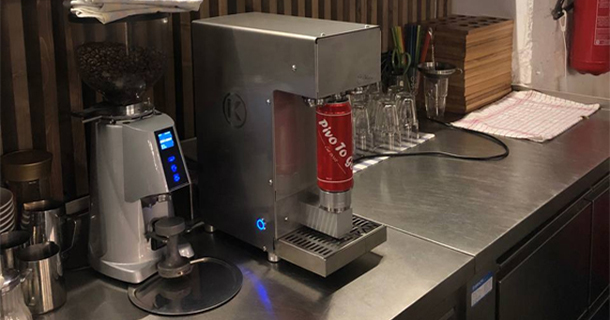
Integrating a canning machine into your existing production workflow can feel like a big leap — especially for small or medium-sized beverage producers. But with the right planning and process design, equipment like Eazy Canning’s FENIX manual filler and iKAN seamer can become seamless parts of your operation, not bottlenecks. When used effectively, these machines maximize productivity, preserve product quality, reduce waste, and scale with your business.
In this article, we’ll go through how to thoughtfully embed your canning operations — from pre-production setup, to filling and seaming, to quality control, maintenance, and continuous improvement. We’ll highlight key process points for your specific Eazy Canning machines.
Why Efficient Integration Matters
- Maintain Product Quality
Poor integration can lead to issues like foaming, oxidation, or seam defects — all of which impact the shelf life and appearance of your beverage. Using Eazy Canning’s counter-pressure filling (via FENIX) and precise seaming (via iKAN) correctly ensures better quality.
- Reduce Waste and Save Costs
If the workflow is inefficient, you might waste raw materials, lids, or even full cans. Proper process flow limits overfills, reduces scrap, and minimizes sanitation-related losses.
- Improve Throughput
With a well-designed workflow, even manual or semi-manual machines can achieve solid output. The iKAN seamer supports up to 10 cans per minute in small-batch settings.
- Enable Scale-Up
A thoughtfully integrated workflow makes it possible to grow volume without totally redoing your floorplan. As demand increases, you can replicate or expand without losing operational continuity.
- Ensure Food Safety and Cleanliness
Proper integration makes CIP (Clean-in-Place), sanitation, and preventative maintenance practical — critical for maintaining hygiene, especially when switching recipes or can formats. Eazy Canning’s FENIX is fully CIP-compatible.
Key Components in Your Workflow
To integrate effectively, these are the main process nodes you need to plan for:
Let’s dive into each.
1. Pre-Production Setup
a. Sanitation & Hygiene
- Before running any batch, run a CIP cycle (clean-in-place) on the FENIX filler. Because FENIX is CIP-compatible, you can clean internal lines and valves without full disassembly.
- Clean seamer components (chucks, rolls, lifters) — remove any residue, dust, or foreign material.
b. Equipment Alignment
- iKAN Seamer: Ensure the seamer is properly set up: lifter height, chuck placement, and the two seaming rolls must be aligned for the can size you’re using. The iKAN accommodates a variety of can diameters (from ~200 ml up to larger cans) thanks to its design.
- FENIX Filler: Inspect gaskets, O-rings and the clamping system. The patented clamp on FENIX locks inside the can neck with a single lever movement — make sure it creates a reliable, repeatable seal.
- Pressure Setup: Set your counter-pressure on the filler according to your beverage type. For carbonated products, counter-pressure is critical to reduce foaming and product loss.
- Spare Parts: Keep spares of critical parts like O-rings, chucks, and seals nearby for quick replacement when needed.
c. Workflow Layout
- Design your workspace so that filled cans transition smoothly from the filler to the seamer. Avoid extra handling, which increases risk and slows the process.
- Position drip trays, work surfaces, and tool storage conveniently. For instance, the iKAN comes with a drip tray — make sure it’s placed to catch drips and splashes.
- Ensure you have a clean area for handling lids, empty cans, and finished product.
2. Filling Stage
a. Purge & Seal
- Purge your empty cans with an inert gas (e.g., CO₂) to reduce oxygen levels before filling. This is a standard practice for counter-pressure filling.
- Use the FENIX clamp to securely seal the can before opening the filling valve. The clamping system is designed for a tight, reliable seal.
b. Conduct the Fill
- Open the filling valve and let the beverage flow into the pressurized can. Because you’re using counter-pressure, you should be able to fill with minimal foaming.
- Monitor fill level using a timer or gauge. According to Eazy Canning specs, the FENIX can fill around 3–4 cans per minute per head.
- Close the valve before the liquid starts to foam above the rim; then, release the clamp once pressure equalizes.
c. Flow Control & Consistency
- Adjust flow rate depending on your beverage viscosity. Thicker or more viscous liquids require slower flow to avoid turbulence.
- Maintain consistent techniques across operators: same clamp force, same fill pressure, same clamping/release sequence.
3. Seaming Stage
a. Positioning the Can
- Immediately after filling, move the can to the seaming station. Minimizing the time between filling and seaming helps reduce oxygen exposure.
- Place the lid properly, ensure it’s correctly centered, and lower the can onto the seamer chuck.
b. Form the Seam
- Use the first operation roll to fold the lid curl into the body flange. Move carefully to avoid deforming the lid or can.
- Engage the second operation roll to tighten and flatten the double seam — making sure to maintain consistent pressure.
- The iKAN is designed for repeatable accuracy and supports rapid seaming (up to 10 cans/min in manual mode).
c. Inspect Seam Immediately
- After seaming, visually inspect every can (or as frequently as your QC protocol dictates) for defects: puckers, pleats, false seams, seam bumps, etc.
- Use seam gauges or measurement tools where possible to verify seam geometry, especially when changing can size or lid specs.
4. Quality Control & Inspection
a. Seam Quality Assurance
- Regularly sample cans for dimensional checks: measure seam thickness, overlap, body hook, and cover hook.
- Maintain a defect-troubleshooting log: note down recurring issues (e.g., false seams, seam bumps) along with their probable causes. Eazy Canning’s troubleshooting guide can help here.
- Depending on regulatory or quality needs, define inspection frequency. For example, visual inspections every 30 minutes, full teardown measurements periodically. (Best practices from manual integration guides suggest frequent checks.)
b. Fill Accuracy & Consistency
- Perform weight checks on filled cans to ensure you’re filling to target volumes.
- Monitor for overfills or underfills. When you identify deviations, adjust fill time, flow rate, or pressure accordingly. Eazy Canning’s troubleshooting content highlights common filling issues like overfilling due to worn seals.
- Keep logs of fill pressure, fill rate, and any adjustments batch-to-batch.
5. Cleaning & Maintenance
a. Daily Cleaning
- After each run, sanitize the filler head, clamp, and any product-contact surfaces.
- Wipe down the seamer’s chuck, rolls, and adjacent surfaces to prevent build-up of syrup, acid or residue.
b. Weekly Maintenance
- Check the condition of gaskets, O-rings, seal surfaces, and the FENIX clamp. Replace worn parts to maintain sealing quality. Eazy Canning recommends regular inspection.
- Inspect seamer rolls and chuck for wear. Clean roll faces and remove any debris.
c. Monthly/Deep Cleaning
- Run a full CIP cycle on the FENIX to clean internal lines, valves, and filling paths.
- Disassemble parts of the seamer (as your standard operating procedures allow) to deep-clean, re-lubricate, and adjust samer tooling alignment.
- Recalibrate lifter height, roll alignment, and perform seam checks to ensure everything remains within spec.
d. Spare Parts & Inventory
- Maintain an inventory of critical spare parts: replacement chucks, O-rings, gasket kits, extra seaming rolls.
- Having these parts readily available prevents downtime when parts wear or fail.
6. Operator Training & Documentation
a. Training
- Train your operators thoroughly: they should understand how to use the FENIX filler’s lever and sealing clamp, adjust fill pressure, and actuate the valve correctly.
- Provide training for seaming: how to properly seat the can, operate the iKAN seamer, and recognize basic seam defects.
- Use Eazy Canning’s user manual, plus your own SOPs (standard operating procedures) that reflect your production environment.
b. Process Documentation
- Develop a standard workflow SOP that defines each step: pre-clean, purge, fill, seam, QC, post-clean.
- Use log sheets for batch data: fill pressure, fill time, seam inspection results, maintenance performed, operator name, etc.
- Keep a troubleshooting record: whenever a defect or issue arises, note down cause, corrective action, and outcome. Over time, this becomes a valuable knowledge base.
7. Continuous Optimization
a. Monitor and Analyze Data
- Regularly analyze your QC logs, maintenance records, and production metrics. Look for patterns (e.g., if seam defects always spike after certain flavors or batches).
- Use this data to refine your process: maybe adjust clamp force, tweak pressure, or change your cleaning schedule.
b. Pilot New Products
- When introducing a new recipe or can size, run small test batches first. This lets you fine-tune filler and seaming settings without risking full production runs.
- Document what works (e.g., ideal pressure, flow, seam settings) for future use.
c. Scale Thoughtfully
- As you grow, you might replicate your workflow station (another FENIX + iKAN) or move to semi-automated systems. But even as you scale, your established workflow practices (cleaning, QC, documentation) remain crucial.
- Continue investing in spare parts, operator training, and process refinement. These incremental efforts pay off in reduced downtime and consistent quality.
Why Eazy Canning’s Machines Help Make This Integration Easier
- Compact, Portable Design: The iKAN seamer weighs only about 18 kg and is small enough to be moved and set up without a permanent footprint.
- Food-Grade Construction: Both FENIX and iKAN are made from food-grade stainless steel and designed for hygienic cleaning, making them ideal for canning workflows where sanitation is key.
- Counter-Pressure Filling: FENIX supports up to 4 bars of pressure, minimizing foam and preserving carbonation — a big advantage in maintaining product quality during integration.
- High Throughput for Manual Machines: While manual, the iKAN can seam up to 10 cans/min, allowing decent throughput within small-batch operations.
- Versatility: iKAN supports a wide range of can sizes (200 ml up to larger formats) which gives flexibility when integrating with different product lines.
- Durability & Reliability: The iKAN is built with high-quality chucks and seaming rolls designed to last, which reduces part replacement frequency.
- Hygiene Support: The FENIX filler’s CIP compatibility makes it easier to incorporate cleaning stations into your production flow.
- Support & Expertise: Eazy Canning’s blog provides guides like how to combine manual filling and seaming efficiently, plus troubleshooting common issues — these resources help you refine your workflow.
Common Pitfalls & How to Avoid Them
- Poor Layout
- Risk: Bottlenecks when moving cans between filling and seaming.
- Solution: Map your process flow, minimize handling, and design workspace to support linear movement (cans → filler → seamer → QC → storage).
- Risk: Bottlenecks when moving cans between filling and seaming.
- Undertraining Operators
- Risk: Inconsistent fill levels, leaking seams, contamination.
- Solution: Invest in regular training and refreshers. Use SOPs, checklists, and hands-on practice with actual products.
- Risk: Inconsistent fill levels, leaking seams, contamination.
- Neglecting Maintenance
- Risk: Equipment wear leading to downtime or product defects.
- Solution: Build maintenance tasks into your schedule (daily, weekly, monthly), as described above.
- Risk: Equipment wear leading to downtime or product defects.
- Skipping QC Checks
- Risk: Defective cans slipping through, customer complaints, leaks.
- Solution: Define inspection protocols for seam quality, fill accuracy, and log everything.
- Risk: Defective cans slipping through, customer complaints, leaks.
- Rushing Scale-Up Without Process Stability
- Risk: Scaling too early can lead to quality problems, inconsistent production, or wasted capital.
- Solution: Use pilot runs, validate processes, and refine before adding capacity or automating further.
- Risk: Scaling too early can lead to quality problems, inconsistent production, or wasted capital.
Conclusion
Integrating your FENIX filler and iKAN seamer into your production workflow thoughtfully is the key to achieving efficient, reliable, high-quality canning — without needing large-scale automation. By designing a smart pre-production setup, managing a disciplined fill → seam → inspect → clean cycle, training your team well, and continuously optimizing, you can turn these compact machines into the backbone of your packaging operations.
Through process design, data-driven decision-making, and regular maintenance, you’ll unlock the full potential of your canning equipment. The result? Fewer mistakes, less waste, consistent product quality, and a scalable workflow that can grow with your business.

Leave a Reply