
Why Great Drinks Fail: Packaging Mistakes That Hurt New Beverage Brands
Formulating a great drink is incredibly tough.
Whether you’re perfecting a smooth cold brew, a velvety nitro coffee, a crisp craft soda, or a functional wellness blend, nailing a recipe takes serious time, creativity, and endless rounds of trial and error.
But honestly? Having a delicious product just isn’t enough anymore.
People will never actually get around to loving your drink if poor packaging ruins its freshness, cuts its shelf life short, or just looks uninspiring on a shelf.
Your packaging is usually the very first interaction a customer has with your brand. It does the heavy lifting of protecting your product, grabbing someone’s attention in a crowded aisle, unlocking distribution deals, and keeping your business profitable over the long haul.
For startups, a single packaging blunder can end up being a massive, budget-draining mistake.
The silver lining? Almost all of these pitfalls are entirely avoidable if you know what to watch out for.
Why Packaging Matters More Than Ever
The beverage market has become incredibly competitive.
Consumers now have thousands of options across categories such as:
- Cold brew coffee
- Nitro coffee
- Energy drinks
- Functional beverages
- Craft beer
- Sparkling water
- Kombucha
- Ready-to-drink cocktails
When customers stand in front of a retail shelf, they often make purchasing decisions within seconds.
Before they taste your beverage, they notice:
- The packaging
- The branding
- The product presentation
- The perceived quality
Even if your beverage tastes exceptional, poor packaging can create negative first impressions that impact sales.
Packaging is not just a container.
It is a critical part of the product itself.
1․ Choosing Packaging Based Only on Cost
Many startups operate on tight budgets.
As a result, some brands focus exclusively on finding the cheapest packaging solution available.
While controlling costs is important, selecting packaging solely based on price can create long-term problems.
Cheap packaging may result in:
- Reduced product protection
- Lower perceived value
- Shorter shelf life
- Increased transportation issues
- Higher product waste
A small upfront saving can quickly become a much larger expense when quality issues emerge.
The Better Approach
Evaluate packaging based on total business value rather than initial cost alone.
Consider:
- Product protection
- Shelf stability
- Branding opportunities
- Distribution requirements
- Customer experience
The best packaging solution often delivers savings through improved product quality and reduced waste.
2․ Underestimating the Importance of Freshness Protection
Many beverages are sensitive to environmental factors.
Coffee, for example, is particularly vulnerable to:
- Oxygen exposure
- Light exposure
- Temperature fluctuations
Over time, these factors can negatively impact:
- Flavor
- Aroma
- Appearance
- Overall freshness
Many new beverage brands focus heavily on recipe development while overlooking the role packaging plays in preserving product quality.
The Better Approach
Select packaging that provides strong protection from external elements.
Aluminum cans have become increasingly popular because they offer:
- Complete light protection
- Excellent oxygen barriers
- Durability
- Consistent product preservation
This is one reason why so many successful cold brew and nitro coffee brands choose cans over alternative packaging formats.
3․ Ignoring Shelf Life During Product Development
A beverage may taste fantastic on production day.
The real question is:
Will it still taste great weeks or months later?
Many beverage startups underestimate the importance of shelf-life planning.
Without proper packaging and production practices, beverages can experience:
- Flavor degradation
- Oxidation
- Gas loss
- Quality inconsistencies
These issues often become apparent only after products reach retailers.
The Better Approach
Shelf life should be considered from the earliest stages of product development.
Packaging, filling methods, sealing quality, and storage conditions all play important roles in determining how long a beverage maintains its intended quality.
4․ Poor Oxygen Management During Filling
One of the most common reasons beverage quality declines is oxygen exposure during packaging.
Even small amounts of oxygen can contribute to:
- Oxidation
- Flavor loss
- Reduced shelf life
- Product inconsistency
For coffee beverages, this can significantly impact the customer experience.
The Better Approach
Professional filling systems help minimize oxygen pickup during production.
Counter-pressure and reverse-pressure filling technologies create a more controlled environment that helps preserve product quality.
This becomes particularly important for cold brew coffee, nitro coffee, and other premium beverages where flavor preservation is critical.
5․ Poor Can Seam Quality
A beverage package is only as good as its seal.
Even the highest-quality beverage can be compromised if the can seam is defective.
Poor seams can result in:
- Leaks
- Contamination
- Oxygen ingress
- Product spoilage
- Reduced shelf life
Customers rarely know the cause of the problem.
They simply blame the brand.
The Better Approach
Invest in reliable can seaming equipment and implement quality control procedures.
Consistent seam integrity is one of the most important factors in successful beverage packaging.
Professional can seamers help ensure every can leaves production properly sealed and protected.
6․ Creating Packaging That Looks Generic
Many startup beverage brands focus so heavily on the beverage itself that they neglect visual branding.
The result is a product that disappears on crowded retail shelves.
Consumers are drawn to products that:
- Look professional
- Communicate quality
- Tell a story
- Stand out visually
A great beverage hidden inside forgettable packaging often struggles to gain attention.
The Better Approach
Treat packaging as part of your marketing strategy.
Strong visual branding can help:
- Increase shelf visibility
- Improve customer recall
- Support premium pricing
- Build brand loyalty
Your packaging should immediately communicate what makes your beverage unique.
7․ Choosing the Wrong Packaging Format for Growth
Some beverage brands launch using packaging that works for local sales but creates challenges as they scale.
As distribution expands, businesses often encounter issues related to:
- Transportation
- Storage
- Retail compatibility
- Production efficiency
What works for a small café may not work for regional distribution.
The Better Approach
Think beyond today’s production requirements.
Choose packaging that can support future growth.
Aluminum cans offer several advantages for scaling brands:
- Lightweight transportation
- Efficient storage
- Retail compatibility
- Strong product protection
- High consumer acceptance
These benefits become increasingly valuable as a brand expands into wholesale and retail channels.
8․ Trying to Package Products Without Professional Equipment
Many startups initially attempt to package beverages using improvised methods.
While this may seem cost-effective, it often leads to:
- Inconsistent fills
- Poor seals
- Product waste
- Quality issues
As production volumes increase, manual approaches become difficult to manage.
The Better Approach
Invest in equipment designed specifically for beverage packaging.
Modern compact canning systems make professional packaging accessible to smaller producers without requiring industrial-scale budgets.
This allows businesses to maintain quality while growing efficiently.
How Eazy Canning Helps Beverage Brands Avoid These Mistakes
One of the biggest challenges facing beverage startups is finding equipment that balances quality, affordability, and scalability.
Traditional canning systems are often designed for large manufacturers.
Many small businesses simply don’t need that level of production.
Eazy Canning was created to solve this problem.
Their solutions are specifically designed for:
- Coffee shops
- Beverage startups
- Craft breweries
- Restaurants
- Bars
- Specialty beverage producers
By focusing on compact, professional-grade equipment, Eazy Canning helps businesses package beverages without the complexity of large industrial systems.
The FENIX Can Filling Head
Filling is one of the most important stages in beverage packaging.
The FENIX Can Filling Head helps producers maintain quality during the filling process by providing a controlled environment designed to minimize oxygen exposure and reduce product loss.
Benefits include:
- Reverse-pressure filling technology
- Reduced foaming
- Improved product consistency
- Hygienic stainless-steel construction
- Compact footprint
For cold brew coffee and nitro coffee producers, preserving flavor and beverage integrity during filling is essential.
The FENIX is designed to support those goals.
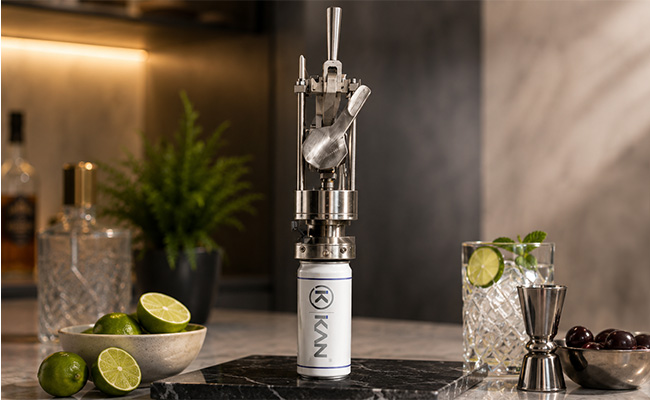
The iKAN Can Seaming Machine
Once a beverage is filled, the seam becomes the primary barrier protecting the product.
The iKAN Can Seaming Machine helps create professional double seams that protect beverages from contamination, oxygen ingress, and leakage.
Benefits include:
- Professional seam quality
- Compact tabletop design
- Multiple can-size compatibility
- Easy operation
- Durable construction
For beverage startups, this provides access to professional packaging without the cost and space requirements of larger systems.
Why More Beverage Brands Are Moving to In-House Canning
Historically, many small beverage companies relied on contract packers.
While contract packing can be valuable, it often introduces challenges such as:
- Minimum order requirements
- Production scheduling limitations
- Reduced flexibility
- Higher costs
Compact canning systems allow businesses to maintain greater control over production.
Benefits include:
- Faster product launches
- Smaller test batches
- Improved quality control
- Greater flexibility
- Reduced operational risk
For startups, this agility can be a significant competitive advantage.
Final Thoughts
Many beverage brands assume product quality alone determines success.
In reality, packaging often plays an equally important role.
Poor packaging decisions can reduce shelf life, compromise flavor, increase costs, and limit growth opportunities. In some cases, they can cause excellent beverages to fail before customers ever have a chance to appreciate them.
The most successful beverage brands understand that packaging is not an afterthought—it is a critical part of the product experience.
By avoiding common packaging mistakes and investing in reliable filling and canning solutions, beverage producers can protect product quality, strengthen their brand, and build a foundation for long-term growth.
With compact professional systems like the FENIX Can Filling Head and the iKAN Can Seaming Machine, Eazy Canning helps beverage brands package with confidence, preserve quality, and bring great drinks to market successfully.
