
Why In-House Canning Is Becoming More Common
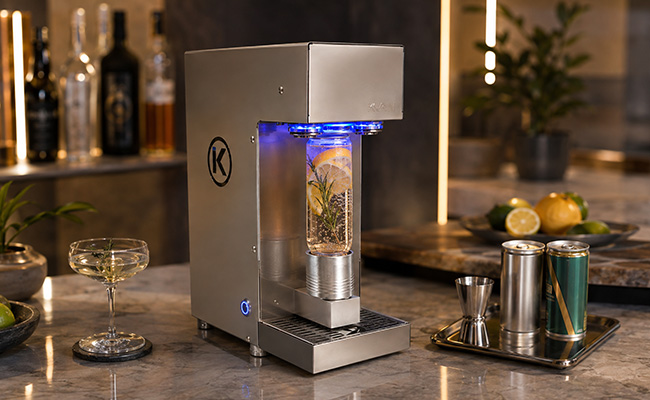
The way beverages are produced is changing. In the past, launching a canned drink usually required large factories, expensive equipment, and partnerships with major manufacturers. Today, smaller brands are changing the game.
Breweries, coffee roasters, kombucha makers, restaurants, and beverage startups are creating products that compete with bigger names by focusing on quality, creativity, and local appeal.
At the same time, modern canning technology has become more accessible. Compact systems now allow businesses to package their own drinks without relying entirely on external producers. For many companies, in-house canning means having more control, moving faster, testing new ideas, and turning great recipes into finished products whenever demand appears.
Eazy Canning helps businesses make this possible with compact filling and seaming solutions designed for growing beverage producers.
Why the Beverage Industry Is Changing
Several powerful forces are reshaping beverage manufacturing simultaneously. While consumer tastes have always influenced product development, today’s market moves at an unprecedented pace.
Consumers Want More Choice Than Ever
Walk through any supermarket today, and you’ll notice something that would have been unusual fifteen years ago: shelves filled with hundreds of beverage brands.
Instead of choosing between a handful of global products, consumers now expect options such as:
- craft beer
- specialty coffee
- nitro cold brew
- kombucha
- sparkling botanical drinks
- functional beverages
- alcohol-free cocktails
- premium mixers
- locally produced soft drinks
This growing diversity has made flexibility a competitive advantage. Companies that can quickly introduce seasonal releases, limited editions, or experimental flavors are often better positioned to capture consumer interest than brands tied to long production cycles.
Innovation Has Become Continuous
Launching one flagship beverage is no longer enough.
Many successful producers now release:
- seasonal products
- holiday editions
- collaboration brews
- experimental recipes
- customer-inspired flavors
- regional exclusives
These smaller production runs are difficult to justify through traditional industrial packaging, which is typically optimized for very large volumes. Compact in-house canning allows producers to package exactly what they need, when they need it, without committing to tens of thousands of units.
The Rise of In-House Canning
For decades, beverage producers generally followed one of two paths:
- Purchase an expensive industrial canning line.
- Outsource packaging to a contract packer.
Neither option was ideal for growing businesses.
Industrial lines require major investments—not only in equipment but also in facilities, staffing, maintenance, and production volume. Outsourcing removes some of that burden but introduces different challenges, including scheduling constraints, transportation costs, and minimum order quantities.
Today, compact canning equipment has created a third option.
Instead of adapting to someone else’s production schedule, businesses can manage packaging internally while maintaining professional standards. This approach gives producers greater control over every stage of the process—from filling and seaming to quality checks and inventory planning.
Why Outsourcing Is No Longer Enough
Contract packaging still serves an important role, particularly for high-volume production. However, it is not always the best fit for businesses focused on flexibility and innovation.
Many producers face challenges such as:
- minimum order quantities that exceed demand
- fixed production schedules
- transportation of bulk liquids
- extended lead times
- limited opportunities for recipe changes
- reduced control over quality checks
- slower response to customer feedback
For businesses that frequently introduce new products or operate on a smaller scale, these constraints can slow growth.
In-house canning addresses many of these issues by allowing production to take place on the company’s own timeline. A café can package a successful cold brew recipe after a busy weekend. A brewery can release a limited-edition beer without waiting for a co-packer’s next available slot. A restaurant can transform a popular mocktail into a retail-ready product for takeaway sales.
The Business Case for In-House Canning
For many beverage producers, the decision to start canning internally is not only about packaging. It is about gaining more control over the entire business.
In-house canning provides an alternative approach.
By investing in compact canning equipment, businesses can take ownership of one of the most important stages of the production process: turning their beverage into a finished retail-ready product.
This shift allows companies to operate more efficiently while opening opportunities that were previously available only to larger manufacturers.
For breweries, cafés, restaurants, beverage startups, and specialty producers, in-house canning can become a growth tool rather than simply a production decision.
1. Lower Long-Term Production Costs
One of the biggest reasons businesses move toward in-house canning is financial control.
Outsourcing packaging may appear cheaper at the beginning because it avoids equipment investment. However, over time, external packaging costs can significantly affect margins.
When working with a contract canner, businesses usually pay for:
- Packaging services
- Transportation
- Scheduling costs
- Minimum production quantities
- Additional handling fees
- Storage requirements
- External labor costs
These expenses accumulate with every production cycle.
In contrast, in-house canning requires an initial investment but allows businesses to reduce recurring packaging costs and create a more predictable production model.
For companies producing regularly, the ability to package products internally can improve profitability by reducing dependence on external suppliers.
Compact systems such as the Eazy Canning iKAN Can Seamer and FENIX Filling Machine are designed specifically for producers that need professional packaging capabilities without investing in a full industrial production line. The equipment enables businesses to manage smaller production volumes efficiently while maintaining commercial-quality results.
2. Greater Production Flexibility
Modern beverage brands succeed through speed and adaptability.
Consumer preferences change quickly. A flavor that performs well today may be replaced by a new trend tomorrow. Companies that can experiment and respond quickly have a significant advantage.
In-house canning allows producers to create:
- Limited-edition releases
- Seasonal beverages
- Small test batches
- New product variations
- Custom collaborations
- Event-specific products
Instead of committing to thousands of cans before knowing whether a product will succeed, businesses can test demand with smaller quantities.
This approach is especially valuable for emerging categories such as:
- Functional beverages
- Cold brew coffee
- Craft cocktails
- Non-alcoholic drinks
- Kombucha
- Specialty teas
A small beverage producer can introduce a new product, collect customer feedback, and adjust the recipe or packaging strategy without waiting months for another production cycle.
3. Improved Quality Control
For beverage producers, consistency is everything.
Customers expect the same taste, carbonation level, appearance, and freshness every time they purchase a product.
When packaging is outsourced, producers must rely on another company’s processes, equipment, and schedule.
While professional co-packers can deliver excellent results, businesses have less direct control over the final stage of production.
In-house canning gives producers greater oversight of:
- Filling accuracy
- Carbonation levels
- Packaging quality
- Production timing
- Batch consistency
- Quality inspections
This is particularly important for beverages where small differences can affect customer experience.
4. Sustainability Benefits
Sustainability has moved from being a marketing advantage to becoming a business requirement.
Consumers increasingly evaluate brands based on environmental responsibility, including packaging choices.
Aluminum cans have become one of the preferred beverage packaging formats because they are lightweight, recyclable, and efficient to transport.
According to the Aluminum Association, aluminum beverage cans are among the most recycled consumer packaging products and can be recycled repeatedly without losing their fundamental properties.
In-house canning can further support sustainability goals by reducing unnecessary logistics.
Outsourced packaging often involves:
- Transporting beverages to another facility
- Moving finished products back to warehouses
- Additional handling stages
Producing closer to the point of sale can reduce transportation requirements and improve operational efficiency.
For local breweries, restaurants, and cafés, this creates an opportunity to combine sustainable packaging with local production.
5. Creating New Revenue Streams
Perhaps one of the most overlooked benefits of in-house canning is the ability to create completely new business opportunities.
A beverage that previously existed only as a draft product or restaurant menu item can become a packaged product.
Examples include:
The Future Belongs to Flexible Beverage Production
The rise of in-house canning reflects a broader shift in manufacturing.
Businesses no longer need to choose between expensive industrial equipment and complete dependence on external suppliers.
Compact canning technology provides a middle ground—professional packaging capabilities with greater control and flexibility.
For growing beverage companies, this means:
- lower dependence on third parties
- faster innovation
- better quality control
- improved sustainability
- additional revenue opportunities
As consumer demand continues moving toward unique, local, and specialized beverages, the ability to produce and package products efficiently will become an increasingly important competitive advantage.
How Eazy Canning Solves the Challenges of Modern Beverage Production
Modern beverage producers face several recurring challenges:
- How to package products without investing in a full industrial line
- How to maintain quality during filling and sealing
- How to produce smaller batches profitably
- How to launch new products faster
- How to reduce dependence on external suppliers
- How to scale production gradually
Eazy Canning’s approach is based on solving these exact problems.
Instead of forcing businesses into a traditional factory model, the company provides equipment designed around the needs of breweries, cafés, restaurants, startups, and specialty beverage producers.
The two core solutions are:
- FENIX Counter-Pressure Filling System
- iKAN Automatic Can Seamer
Together, these machines create a compact canning workflow that allows businesses to fill and seal professional-quality cans internally.
FENIX: Professional Filling Without Industrial Complexity
Filling is one of the most critical stages in beverage packaging.
A poorly designed filling process can affect:
- carbonation retention
- product consistency
- shelf life
- appearance
- customer experience
This is especially important for carbonated beverages, where excessive foaming or oxygen exposure can negatively impact the final product.
The FENIX Filling Machine is designed to solve these challenges through reverse-pressure filling technology.
The system allows producers to fill carbonated beverages while maintaining pressure control, helping reduce foam formation and preserve beverage quality.
According to Eazy Canning, FENIX features:
- Counter-pressure filling technology
- Compatibility with carbonated drinks
- Filling pressure up to 4 bar
- Fully CIP-compatible design
- Production capacity of approximately 3–4 cans per minute per filling head
- Dual-head configurations capable of reaching higher output levels
Take Control of Your Beverage Production
The beverage industry is changing. Businesses no longer need to choose between expensive industrial equipment and complete dependence on external packaging partners.
With compact canning solutions from Eazy Canning, producers can package beverages professionally, launch new products faster, and scale according to demand.
Whether you operate a brewery, café, restaurant, coffee brand, or beverage startup, bringing canning in-house can help you build a more flexible and profitable production model.
Contact Eazy Canning today to find the right filling and seaming solution for your business.
