
Compliance, Safety & Hygiene: Canning Machines and Regulatory Considerations in Europe
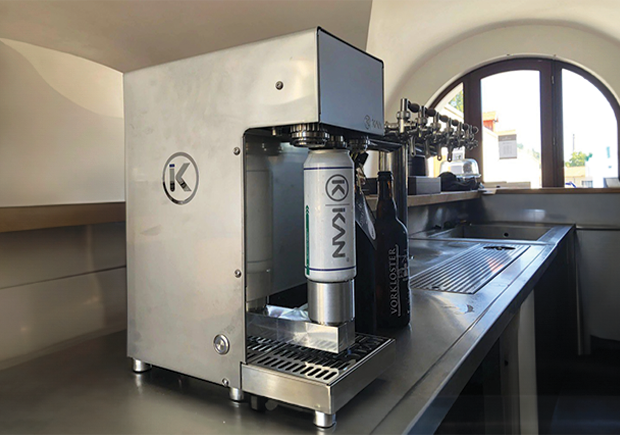
Running a beverage business in Europe comes with plenty of exciting moments — developing new flavours, perfecting your recipes, and finally seeing your drinks sealed and ready to reach customers. But behind every great product is something less glamorous yet absolutely essential: strong hygiene, safety, and compliance practices.
Whether you’re using manual or semi-automatic equipment like Eazy Canning’s FENIX filler or iKAN seamer, staying compliant isn’t just about following rules. It’s about protecting the quality you work so hard to create, keeping your customers safe, and building a business you can proudly stand behind.
In this article, we’ll break things down in a clear, practical way and explore:
- The key European regulations that affect canning equipment and food contact materials
- The safety and hygiene practices every canning operation should follow
- How to make compliance part of your everyday workflow
- Practical recommendations tailored to Eazy Canning’s machines
Let’s make compliance simple — and set your canning process up for long-term success.
1. Key European Regulations for Canning Equipment & Food Contact Materials
To ensure your canning operation is compliant, you need to understand the core EU regulatory framework for food contact materials (FCMs) and food safety.
a) Regulation (EC) No 1935/2004 — Food Contact Materials Framework
- The foundational EU regulation for anything that comes into contact with food, including machinery surfaces.
- Key requirements: materials must not release harmful substances into food, and must not change the food’s taste, odor or composition in an unacceptable way.
- Traceability: you need to be able to trace the origin of the materials and components, which helps in recalls if there is an issue.
- Labeling: materials should often have a “for food contact” symbol or appropriate use indication.
b) Good Manufacturing Practice (GMP) — Regulation (EC) No 2023/2006
- This sets quality assurance and control requirements for how FCMs are manufactured.
- It ensures that the production of food-contact parts (e.g., stainless steel components, seals, clamps) is controlled, documented, and traceable.
- For you as a canning-line operator, this means you should work with suppliers that comply with GMP, and maintain documentation to show that the parts in contact with food are safe.
c) Metal-Specific Requirements
- Metals and alloys (like stainless steel) used in food contact applications must meet the general safety requirements of 1935/2004.
- While there is no single EU “metal regulation” that parallels plastics’ specific migration limits, you still need to ensure that any metal parts in contact with your beverage (e.g., chucks, seaming rolls, filling clamps) are safe, inert, and stable.
- For stainless steel in particular, many parts are designed to comply with international hygienic design standards and are declared to meet food contact safety. Parts from reputable manufacturers often provide declarations of compliance for materials like 304 or 316 stainless steel.
d) Food Safety & Hygiene Regulations
- Beyond FCM regulations, general food hygiene rules apply. A key regulation is Regulation (EC) 852/2004 (on the hygiene of foodstuffs), which mandates food business operators maintain sanitary conditions, especially for surfaces and equipment that touch food.
- Hazard Analysis and Critical Control Points (HACCP) principles are widely used in Europe. While HACCP certification is not always legally mandatory, implementing a HACCP-based food safety system is a best practice to identify where risks (microbial, chemical, physical) might enter your canning process.
e) Role of EFSA
- The European Food Safety Authority (EFSA) assesses risks related to chemical migration from food contact materials, ensuring that substances used in FCMs don’t pose health risks.
- When new materials or substances are used (or existing ones change), assessments may be needed to confirm compliance.
2. Safety & Hygiene Best Practices in a Canning Line
Regulatory compliance is not just theoretical — it must be implemented through everyday practices. For a canning line using manual or semi-manual equipment, here are some critical safety and hygiene practices:
a) Hygienic Design of Machinery
- Use food-grade stainless steel: Equipment parts in contact with beverage (like chucks, filler heads, clamps) should be made from stainless steel that is corrosion-resistant and smooth, minimizing microbial harborage.
- Avoid “dead spots”: Design or arrange your workspace so there are no hidden crevices where liquid, sugar, or syrup can pool and spoil.
- Seals and gaskets: Make sure the materials (rubber, elastomer) used for clamp gaskets, O-rings, etc., are suitable for food contact (non-toxic, stable) and are regularly inspected for integrity.
b) Clean-in-Place (CIP) Procedures
- Implement a CIP routine for filling equipment: Since Eazy Canning’s FENIX filler supports CIP, you can (and should) clean its internal lines, valves and contact surfaces without full disassembly.
- Validate your CIP cycles: Monitor flow, temperature, chemical concentration (if you use cleaning chemicals), and contact time to ensure effectiveness.
- Rinse thoroughly: Make sure all cleaning agents are fully rinsed out before product contact. Residual detergent or sanitizer could contaminate your beverage.
c) Preventing Contamination
- Purging: Before filling, purge cans with inert gas (CO₂ or nitrogen) to minimize oxygen and reduce the risk of microbial growth or oxidation.
- Sanitize lids and cans: Ensure your empty cans and lids are stored in a clean environment; sanitize them if needed before use.
- Clean surfaces: The canning area (tables, conveyor, work surfaces) should be regularly sanitized, especially between production runs or flavor changes.
d) Employee Training & Hygiene
- Good hygiene practice (GHP): Staff should wear protective clothing (hair nets, gloves, sanitation-appropriate clothes), wash hands, and handle cans/lids in a hygienic way.
- Training: Operators should be trained in safe operation of filler and seamer, cleaning procedures, and how to identify microbial or physical contamination risks.
- Documentation: Maintain cleaning logs, CIP checklists, and sanitation records. These are not just good practice — they support traceability and audits.
e) Hazard Analysis (HACCP)
- Identify critical points: For a canning line, critical control points might include purging, filling, seam sealing, and post-seam inspection.
- Monitoring: Define how you’ll monitor each CCP (e.g., pressure, flow, time, seam parameters) and who is responsible.
- Corrective actions: Pre-define what to do if a control point goes out of spec (e.g., if seam quality fails, rerun, or adjust tooling).
- Verification: Periodically validate that your controls are effective (e.g., test microbial loads if relevant, check seam integrity).
3. Integrating Compliance into Your Canning Operation (with Eazy Canning Machines)
Here’s how you can apply the regulatory and hygiene rules specifically when using Eazy Canning’s equipment:
- Supplier Documentation & Declarations
- When purchasing your iKAN seamer or FENIX filler, ask Eazy Canning for material declarations or conformity statements for all food-contact parts (stainless steel surfaces, clamps, O-rings).
- Keep records of these Declarations of Compliance (DoC) to prove compliance under Regulation 1935/2004.
- When purchasing your iKAN seamer or FENIX filler, ask Eazy Canning for material declarations or conformity statements for all food-contact parts (stainless steel surfaces, clamps, O-rings).
- Machine Qualification & Installation
- During installation, ensure that all surfaces that contact beverage are smooth, cleanable, and appropriately sealed.
- Perform a cleanliness qualification: run a CIP cycle (if applicable), then sample rinse water to ensure no unacceptable residues remain.
- Establish your Standard Operating Procedures (SOPs) for purging, filling, seaming, cleaning, and changeovers — these SOPs help enforce GMP and hygiene.
- During installation, ensure that all surfaces that contact beverage are smooth, cleanable, and appropriately sealed.
- Cleaning & Sanitizing Regimen
- For the FENIX filler: run CIP cycles daily (or between batch types), and document each CIP run (time, chemicals, flow).
- For the iKAN seamer: after every production session, disassemble accessible parts (e.g., chuck, lid guides) for manual cleaning, then sanitize them.
- Use food-safe cleaning agents and make sure they are compatible with the materials (e.g., stainless steel, elastomer gaskets).
- For the FENIX filler: run CIP cycles daily (or between batch types), and document each CIP run (time, chemicals, flow).
- Traceability & Record-Keeping
- Maintain batch records: for each run, note can batch, lid batch, operator, fill parameters (pressure, time), seam parameters, and any QC observations.
- Keep a maintenance log: note when you change O-rings, when seals are replaced, when CIP cycles are validated.
- Store supplier DoCs, test reports, and any certificates of material compliance in an organized way — crucial for audits or inspections.
- Maintain batch records: for each run, note can batch, lid batch, operator, fill parameters (pressure, time), seam parameters, and any QC observations.
- Quality Control & Testing
- Perform regular seam inspections: use gauges or micrometers to check seam dimensions (thickness, overlap, interlock) and make sure they remain within spec.
- Periodically test for chemical safety: you might periodically sample your product or rinse to ensure no migration from machine parts; rely on material declarations from your parts, but also consider lab testing if needed.
- Microbiological testing: depending on your product (especially if non-sterilized, still, or higher-risk), test finished cans for microbial contamination as part of your verification plan.
- Perform regular seam inspections: use gauges or micrometers to check seam dimensions (thickness, overlap, interlock) and make sure they remain within spec.
- Training & Review
- Set a training schedule: train all operators and maintenance staff on hygiene practices, cleaning cycles, CCP monitoring, and corrective actions.
- Review your HACCP plan: as you scale or change SKU (flavor, carbonation, can size), revisit your hazard analysis and make necessary updates.
- Audit internally: regularly run internal audits to confirm that SOPs are being followed, records are accurate, and compliance is maintained.
- Set a training schedule: train all operators and maintenance staff on hygiene practices, cleaning cycles, CCP monitoring, and corrective actions.
4. Benefits of Good Compliance & Hygiene for Your Business
Integrating these compliance and safety practices does more than just satisfy regulators — it offers real business advantages, especially when using manual/semi-manual canning equipment like Eazy Canning’s:
- Product Quality: Maintaining hygienic filling and seaming preserves flavor, stability, and shelf life — especially for delicate beverages.
- Brand Trust: Demonstrating rigorous food safety processes builds customer confidence, especially in the craft beverage sector.
- Risk Mitigation: Proper traceability, documentation, and hazard control reduce the likelihood of recalls or food-safety incidents.
- Scalability: With a well-documented, compliant foundation, you’re better prepared to scale your operation, add batch capacity, or even transition to larger equipment later.
- Audit Readiness: Whether for EU inspections, customer audits, or certification (e.g., ISO, HACCP), having structured hygiene and compliance systems helps you pass checks with confidence.
Conclusion
Compliance, safety, and hygiene are foundational to any canning operation in Europe — and even more so when you’re working with manual or semi-automatic equipment like the Eazy Canning FENIX filler and iKAN seamer. By aligning with EU regulations (like Regulation (EC) 1935/2004 and GMP Regulation (EC) 2023/2006), implementing strong hygiene practices, and building in traceability and quality control, you can protect consumers and build a resilient, high-quality canning business.
Key takeaways:
- Treat all food-contact parts seriously: ensure your materials are certified, traceable, and suitable for beverages.
- Build hygiene into your design: CIP, sanitizing, and operator training are non-negotiable.
- Use documentation to your advantage: logs, SOPs, and Declarations of Compliance are your best tools for safety and audits.
- Think long-term: good compliance practices support growth, trust, and scalability.
If you like, I can create a compliance checklist or hygiene SOP sample specifically tailored for Eazy Canning’s machines — do you want me to put that together?

Leave a Reply