
How to Start a Canning Line in Your Coffee Shop With Minimal Space
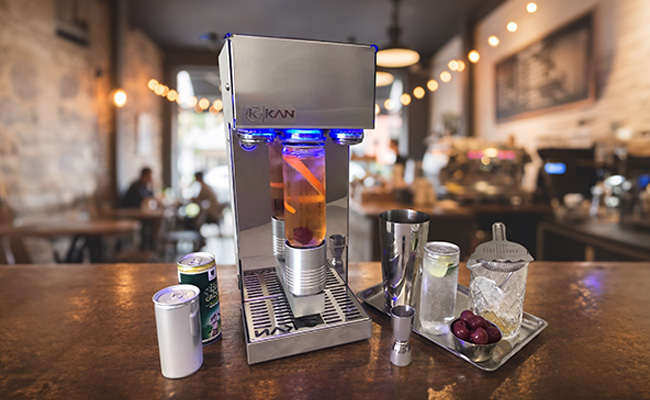
The modern coffee shop is no longer just a place to serve drinks — it’s becoming a micro beverage production brand. Cold brew, nitro coffee, iced lattes, and specialty drinks are now being packaged as ready-to-drink (RTD) canned products that extend far beyond the café counter.
But one major barrier holds many café owners back:
“We don’t have enough space for a canning line”.
The good news: you don’t need a factory.
With compact systems like Eazy Canning’s FENIX filler and iKAN seamer, coffee shops can build a fully functional canning line in a small backroom, prep area, or even a corner of the café kitchen.
This guide explains exactly how to do it step by step.
Why Coffee Shops Are Adding Canning Lines
Before setup, it’s important to understand why canning has become a major trend in the coffee industry.
According to Eazy Canning’s industry insights, cafés are adopting canning to:
- Extend shelf life of cold brew and specialty drinks
- Reduce waste from unsold daily batches
- Create new revenue streams beyond in-store sales
- Sell products through retail and wholesale channels
- Build a recognizable beverage brand outside the café
Instead of depending only on foot traffic, coffee shops can turn their signature drinks into scalable retail products.
The Key Advantage: Minimal Space Requirements
Traditional canning lines are large, expensive, and factory-based.
Modern café-focused systems are different.
Eazy Canning’s solutions are designed specifically for:
- Small coffee shops
- Roasteries
- Commercial kitchens
- Micro beverage producers
Their equipment is compact, table-based, and portable, making it possible to operate in extremely limited spaces.
Even a few square meters of clean workspace is enough to build a functional production line.
The Core Equipment You Need
A small coffee shop canning line only needs two essential machines:
A. FENIX Can Filling System (The Filling Stage)
The FENIX filler is a manual reverse-pressure filling system designed for small-batch beverage production.
It is ideal for coffee shops producing cold brew, iced coffee, or lightly carbonated drinks.
Key benefits:
- Precise and consistent filling
- Food-grade stainless steel construction
- Easy cleaning (CIP-compatible design)
- Suitable for small batch production
- Minimal training required
Production capacity: approximately 100–150 cans per hour depending on workflow.
Why it matters for cafés:
You can produce fresh RTD coffee without industrial infrastructure or co-packers.
B. iKAN Can Seaming Machine (The Sealing Stage)
After filling, the can must be sealed perfectly to preserve freshness and prevent leaks.
The iKAN seamer is a compact, professional-grade sealing machine built for café environments.
Key benefits:
- Airtight, retail-quality seams
- Compact tabletop design
- Handles multiple can sizes (200ml–1L range)
- Durable stainless steel construction
- Fast operation (up to ~10 cans per minute)
Why it matters for cafés:
A perfect seal ensures shelf stability, flavor protection, and retail readiness.
How to Fit a Canning Line Into a Small Coffee Shop
You don’t need a production hall. You need smart spatial design.
Here’s a proven layout used in small café setups:
1. Prep Zone (1–2 m²)
- Cold brew tanks or batch coffee system
- Ingredient preparation
- Sanitization station
2. Filling Station (FENIX)
- Counter or stainless table
- Cans arranged in trays
- CO₂ setup if needed
3. Sealing Station (iKAN)
- Adjacent tabletop setup
- Direct transfer from filler
- Minimal movement to avoid delays
4. Packaging Zone
- Labeling
- Boxing
- Storage or refrigeration
Key design principle:
Keep the workflow linear — not circular.
This avoids congestion and makes even a small space efficient.
The Workflow: How a Small Canning Line Actually Runs
A simple café-friendly production flow looks like this:
Step 1: Preparation
- Sanitize all surfaces and tools
- Prepare cold brew or drink base
- Chill product for better fill quality
Step 2: Filling (FENIX)
- Load empty cans
- Fill with controlled pressure
- Maintain consistent volume per can
Step 3: Sealing (iKAN)
- Immediately seal filled cans
- Inspect seam quality
- Ensure airtight closure
Step 4: Labeling & Packaging
- Apply branding labels
- Pack into cartons
- Prepare for retail or delivery
Step 5: Storage
- Store chilled or ambient depending on product type
- Track batch numbers for quality control
Critical Success Factor: Workflow Efficiency
In small spaces, efficiency matters more than size.
Eazy Canning emphasizes that a proper workflow:
- Prevents bottlenecks
- Reduces product waste
- Improves consistency
- Increases production speed without adding space
Even a simple 2-person team can operate the system effectively:
- Person 1: Filling (FENIX)
- Person 2: Seaming (iKAN + packaging)
Sanitation: The Most Important Step
In beverage production, cleanliness is not optional.
Best practices include:
- Cleaning filler and seamer after each batch
- Using food-grade sanitizers
- Keeping surfaces dry and organized
- Separating clean and used cans
- Maintaining a cleaning log
Because Eazy Canning machines are built from food-grade stainless steel, they are designed for fast cleaning and hygiene compliance.
Scaling Your Coffee Shop Canning Line
One of the biggest advantages of this system is scalability.
You can start small and grow gradually:
Phase 1: Starter Setup
- Manual filling + seaming
- Small batch production
- Testing customer demand
Phase 2: Growth Stage
- Higher production frequency
- Expanded product range (nitro, flavored coffee, seasonal drinks)
- Wholesale distribution
Phase 3: Brand Expansion
- Retail partnerships
- Subscription canned coffee
- Regional or national distribution
Because the system is modular, you don’t need to replace equipment when scaling.
Common Mistakes to Avoid
Coffee shops often fail when setting up canning lines due to:
1. Poor Space Planning
Crowded stations slow down production.
2. Skipping Workflow Design
Machines alone don’t guarantee efficiency.
3. Ignoring Sealing Quality
Bad seams lead to leaks and product loss.
4. Overproducing Too Early
Start small, validate demand first.
5. Weak Sanitation Practices
This directly affects shelf life and brand reputation.
Final Thoughts
Starting a canning line in a coffee shop is no longer an industrial-scale project.
With compact systems like Eazy Canning’s FENIX filler and iKAN seamer, even small cafés can:
- Produce retail-ready canned coffee
- Launch their own beverage brand
- Increase revenue beyond café sales
- Operate in minimal space
- Scale gradually without high risk
The key is not space — it’s workflow, consistency, and smart equipment choice.
If your coffee shop has:
- A back room
- A prep counter
- Or even a small kitchen corner
You already have enough space to start a professional canning operation.
The opportunity is no longer “if you can can your coffee”.
It’s:
“How fast can you turn your café into a beverage brand?”
