
The Real Cost of Not Packaging Your Product
Most beverage and food businesses don’t fail because their product is bad.
They fail because their product never leaves the place it was made.
Whether it’s a café, brewery, restaurant, or startup kitchen, one hidden problem quietly limits growth:
No scalable packaging system.
Without proper packaging—especially shelf-stable formats like cans—businesses remain trapped in a model that depends entirely on daily sales, local traffic, and short product life cycles.
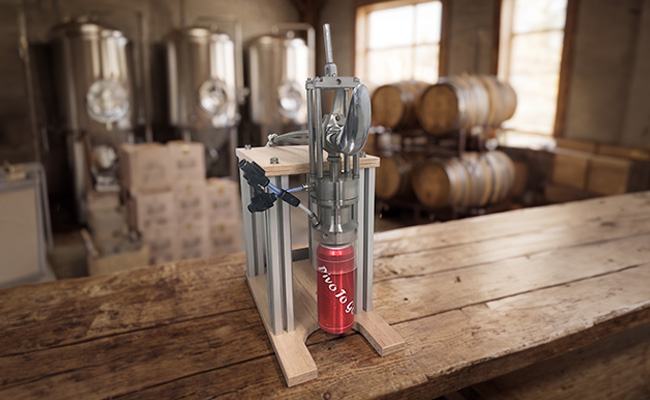
Modern compact systems like Eazy Canning’s FENIX filler and iKAN seamer exist specifically to remove that limitation, allowing small producers to turn products into retail-ready goods without industrial factories or large-scale infrastructure.
This article breaks down the real cost of not packaging your product across three critical dimensions:
- Shelf-life limitations
- Dependency on daily sales
- Lost distribution opportunities
Shelf-Life Limitations: When Great Products Die Too Early
One of the most expensive hidden problems in food and beverage businesses is waste caused by short shelf life.
If your product is only viable for 1–3 days (or requires constant refrigeration), your entire business model becomes fragile.
The hidden cost of “fresh-only” production
Without proper packaging:
- Unsold products are discarded daily
- Ingredients are wasted after peak hours
- Production must restart constantly
- Quality drops rapidly after exposure to oxygen
Even if demand is strong, you are forced to operate in a time-limited window.
Why this happens
The main issue is oxygen exposure and lack of hermetic sealing.
Once a product is opened to air, degradation begins immediately:
- Flavor dulls
- Carbonation disappears
- Microbial risk increases
Eazy Canning highlights that proper counter-pressure filling and airtight seaming significantly reduce oxidation and extend product stability for beverages and food applications.
What packaging solves
With proper canning systems:
- Products become shelf-stable
- Waste is dramatically reduced
- Production can shift from “daily urgency” to planned batches
Systems like the FENIX filler minimize oxygen pickup during filling, while the iKAN seamer creates airtight seals that protect product integrity and extend usable life.
Dependency on Daily Sales: The “Location Trap”
Most small beverage businesses operate under one assumption:
“We only make money when customers physically come to us”.
This creates what can be called the location trap.
The problem with daily-only revenue
Without packaged products:
- Revenue stops when the shop closes
- Growth depends on foot traffic
- Bad weather or seasonality directly affects income
- Scaling requires opening new locations
This model limits businesses to linear growth instead of exponential growth.
Why this is a major risk
If your entire revenue depends on:
- one location
- one customer flow
- one physical space
Then your business is not scalable, it is operationally capped.
What changes with packaging
Once products are packaged properly:
- Sales continue outside opening hours
- Products can be sold in other locations
- Revenue is no longer tied to foot traffic
Eazy Canning emphasizes that small producers can produce flexible batch sizes and operate independently of co-packers, enabling them to scale production based on demand rather than location constraints.
The real shift
Without packaging: You own a place.
With packaging: You own a product.
That difference determines whether your business can scale beyond its physical walls.
Lost Distribution Opportunities: The Invisible Revenue Stream
The biggest missed opportunity is not waste or daily sales—it’s distribution.
Most businesses never enter:
- retail stores
- supermarkets
- gyms and vending networks
- online marketplaces
- wholesale partnerships
Not because their product is not good enough—but because it is not packaged for distribution.
Why distribution matters
Distribution turns a local business into a brand.
Instead of selling:
- 50–200 units per day locally
You could sell:
- thousands of units across multiple channels
But distribution requires one thing:
A stable, transportable, shelf-ready product
The barrier: lack of proper packaging infrastructure
Without packaging:
- Products cannot survive transport
- Shelf life is too short for retail
- Quality degrades before reaching customers
Retail buyers will not accept unstable products.
How canning changes the equation
With compact canning systems like FENIX and iKAN:
- Products become sealed, shelf-stable units
- Small producers can create retail-ready packaging in-house
- Businesses can bypass large co-packers and minimum order quantities
Eazy Canning’s systems are specifically designed for small and medium producers who want to move into retail without industrial-scale investment, offering compact setups that fit into kitchens, bars, or small production spaces.
The opportunity most businesses miss
Without packaging:
You sell locally and repeatedly.
With packaging:
You sell everywhere once.
The Real Financial Impact of Not Packaging
When you combine all three limitations, the financial cost becomes clear:
1. Waste cost
- Unsold inventory
- Spoiled products
- Repeated production cycles
2. Revenue ceiling
- Limited to opening hours
- Dependent on physical traffic
- No passive or external sales
3. Growth limitation
- No retail entry
- No wholesale deals
- No scalable brand building
In other words:
Not packaging your product doesn’t just limit growth—it locks your business into a local-only model.
The Alternative: Turning Production Into a Scalable System
Modern small-scale canning systems solve this problem without requiring factories.
Eazy Canning’s approach is built around:
- compact footprint equipment
- small-batch flexibility
- professional sealing and filling technology
- scalable workflow integration
Their FENIX filler and iKAN seamer allow producers to:
- create shelf-stable products
- reduce waste
- control production in-house
- scale gradually without industrial investment
The Cost of Not Packaging Is Invisible
Most businesses don’t notice the cost of not packaging their product immediately.
It appears slowly as:
- lost sales
- wasted product
- stagnant growth
- dependence on one location
But over time, it becomes the single biggest barrier to scaling.
Packaging is not just about preservation.
It is about freedom:
- freedom from location
- freedom from daily sales cycles
- freedom from limited distribution
With modern compact systems like Eazy Canning’s solutions, even small producers can move from local operations to scalable product brands—without factories, co-packers, or massive investment.
