
Cold Brew, Nitro, or Specialty Drinks? What Works Best for Canned Products
One of the biggest early decisions beverage brands face is surprisingly simple — and extremely expensive if you get it wrong:
What should we put into a can first?
Cold brew, nitro coffee, and specialty drinks all look attractive. But they behave very differently when it comes to shelf stability, consumer demand, production complexity, and profit margins.
And in the canned beverage world, the wrong first product can slow down your entire business.
Let’s break down the three categories across the only three metrics that actually matter:
- Shelf stability
- Consumer demand trends
- Profit margins
1. Cold Brew: The safest and most scalable starting point
Cold brew is the most common entry point into canned coffee — and for good reason.
Shelf stability (Best option)
Cold brew is naturally suited for canning because:
- It is low acidity
- It oxidizes more slowly than hot coffee
- It holds flavor well in sealed environments
In RTD markets, cold brew can maintain quality for extended shelf life when properly packaged in airtight cans. Industry data shows that RTD cold brew is often positioned as a shelf-stable premium beverage category.
Compared to fresh café cold brew (which may last only hours or a day), canned cold brew can last months under proper processing and sealing conditions.
This is where canning systems matter:
Eazy Canning’s counter-pressure filling technology (FENIX) reduces oxygen exposure, which is critical for maintaining shelf stability in coffee products.
Consumer demand (Strongest market pull)
Cold brew is currently:
- The largest RTD coffee segment
- A premium “clean label” beverage
- A mainstream grocery store category
It appeals to:
- health-conscious consumers
- coffee purists
- energy drink alternatives
- daily repeat buyers
Cold brew dominates RTD coffee demand because it aligns with simplicity, low sugar, and perceived quality.
Profit margins (High, but volume-dependent)
Cold brew margins are strong because:
- low ingredient cost
- simple recipe (coffee + water)
- scalable production
However:
- success depends on distribution
- retail pricing is competitive
- logistics and packaging costs matter
Best use case:
- your first canned product
- your “hero SKU” for retail entry
- your testing ground for distribution
2. Nitro Coffee: The premium experience with operational complexity
Nitro cold brew is cold brew infused with nitrogen to create a creamy, cascading texture.
It looks premium. It feels premium. But it behaves differently as a product.
Shelf stability (Medium)
Nitro coffee introduces complexity:
- gas infusion affects packaging requirements
- texture is sensitive to pressure and handling
- quality can degrade if distribution is inconsistent
Industry research shows nitro coffee often requires controlled cold-chain logistics and careful handling, and shelf-life can be shorter than standard RTD beverages if not stabilized properly.
Translation:
Nitro is harder to scale consistently across retail networks.
Consumer demand (High appeal, niche repeat)
Nitro performs strongly in:
- specialty cafés
- premium retail shelves
- urban markets
It attracts:
- early adopters
- “experience-driven” consumers
- coffee enthusiasts
But it has a limitation:
People love it… but don’t always repurchase it as frequently as cold brew.
Profit margins (Highest per unit, lower stability)
Nitro typically sells at a higher price point due to:
- perceived luxury
- production complexity
- “draft-style” positioning
But:
- equipment costs are higher
- operational consistency is harder
- distribution scaling is more fragile
Best use case:
- premium SKUs
- limited editions
- brand differentiation tool (not core volume driver)
3. Specialty Drinks: The high-risk, high-reward category
This includes:
- oat milk lattes
- flavored coffee drinks
- protein coffee
- functional beverages (adaptogens, energy blends)
Shelf stability (Challenging)
This is the hardest category to stabilize because:
- dairy or plant milks reduce shelf life
- sugar and additives increase fermentation risk
- formulas require stabilization or pasteurization strategies
Unlike cold brew, these drinks are composition-sensitive, meaning small changes affect stability and taste.
Consumer demand (Fastest-growing category directionally)
This is where the market is heading:
- functional beverages are booming
- RTD lattes are expanding in retail
- hybrid coffee-energy drinks are increasing
RTD coffee as a whole is now one of the fastest-growing beverage segments globally.
But demand is fragmented:
- health-focused drinks
- indulgent flavored drinks
- energy-boost hybrids
Profit margins (High potential, high risk)
Margins can be excellent if:
- brand positioning is strong
- distribution is secured
- product stability is solved
But risks include:
- shorter shelf life
- higher formulation cost
- more complex production workflow
Best use case:
- brand expansion phase (NOT starting point)
- product diversification after cold brew success
Direct Comparison: What should you can first?
Cold Brew → Best starting point
- safest shelf stability
- easiest production
- highest market acceptance
- lowest operational risk
Nitro → Best premium add-on
- strong branding tool
- higher price point
- moderate complexity
Specialty Drinks → Best scaling phase
- strongest trend potential
- highest differentiation
- highest execution risk
How Eazy Canning enables all three strategies
Most brands fail at canned beverage expansion not because of the recipe, but because of production limitations.
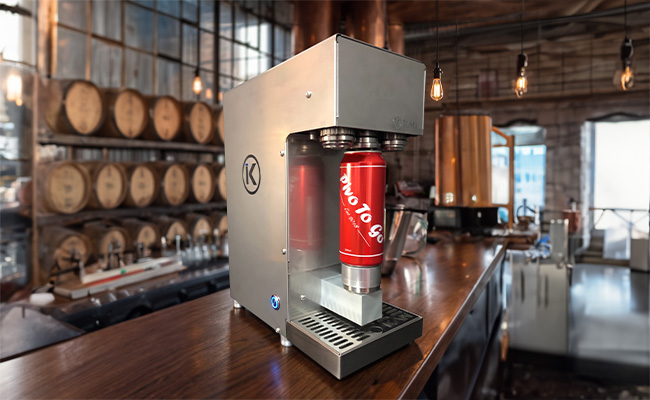
Eazy Canning solves this by enabling small-scale, flexible canning production inside cafés, kitchens, or micro-facilities.
The system is built around:
FENIX Filling System
- small-batch filling control
- reduced oxygen exposure
- consistent liquid dosing
- ideal for cold brew and RTD bases
iKAN Seaming Machine
- airtight sealing for retail distribution
- consistent can closure quality
- supports multiple can formats
- ensures shelf-ready packaging
Together, they allow brands to:
- test cold brew first
- introduce nitro variants later
- experiment with specialty drinks without co-packing constraints
- scale production gradually without factories
The smartest beverage brands don’t start with complexity
The biggest mistake new beverage brands make is trying to launch their “most exciting idea” first.
But in canned products:
Complexity does not win — scalability does.
Simple strategy:
- Cold Brew → build the foundation
- Nitro → elevate the brand
- Specialty Drinks → expand the ecosystem
With flexible systems like Eazy Canning’s compact canning solutions, even small producers can follow this path without industrial infrastructure — starting in a café corner and scaling into a retail beverage brand.
