
Aluminum vs Glass: Which Beverage Packaging Is Easier to Recycle?
Both aluminum and glass beverage containers are recyclable, but aluminum generally has the stronger recycling performance and closed-loop potential.
Recent U.S. data put the consumer recycling rate for aluminum beverage cans at 43%, compared with 39.6% for glass bottles. More importantly, the Aluminum Association reports a 96.7% closed-loop circularity rate for aluminum cans, compared with an estimated 30–60% for glass bottles.
That does not mean aluminum is automatically the most sustainable choice in every situation.
Glass has important advantages: it can be recycled repeatedly, can contain recycled material, and can also be reused when a suitable return-and-refill system exists. The environmental result depends on the entire packaging life cycle, including material production, transportation, package weight, reuse, collection, recycling, and the local waste-management system.
For many beverage startups, aluminum cans offer a particularly attractive combination of recycling potential and practical production advantages.
What Makes Aluminum and Glass Different in Recycling?
Both materials have one major characteristic in common:
Neither aluminum nor glass is inherently a single-use material from a material-recycling perspective.
Both can be collected, processed, and turned into new products.
However, their recycling systems work differently.
Aluminum
Used aluminum cans are collected, sorted, processed, melted, and converted into new aluminum products.
A particularly important characteristic is that aluminum can return to beverage-can production.
The Aluminum Association reports that 96.7% of recycled aluminum beverage-can material in its 2024 U.S. data went into the same product category, compared with approximately 30–60% for glass bottles.
Glass
Glass bottles are also recyclable repeatedly.
EPA states that glass food and beverage containers can be recycled over and over again.
However, recovered glass does not necessarily return to another beverage bottle.
Depending on the collection and processing system, it can be used in different applications, and contamination or mixed-glass collection can affect the quality and economics of recovered material.
This distinction is known as closed-loop versus open-loop recycling.
How Recyclable Is Aluminum?
Aluminum is one of the most valuable materials commonly found in beverage recycling streams.
In the U.S., the Aluminum Association’s 2024 data reported:
- 43% consumer recycling rate
- 57% industry recycling rate
- 71% average recycled content
- 96.7% closed-loop circularity
- approximately $1,338 per ton in material value
The same comparison reported lower recycled content and material value for glass and PET.
The economic value of aluminum is particularly relevant.
Recycling systems need collection, sorting, transportation, and processing. A material with significant market value can provide a stronger economic incentive for recovery.
How Recyclable Is Glass?
Glass is also highly recyclable from a material perspective.
EPA’s U.S. data show that glass containers have historically had significant recycling volumes. In 2018, approximately 31.3% of glass containers and packaging by weight were recycled.
Glass has another important characteristic:
It can be recycled repeatedly without fundamentally changing into a different material.
EPA specifically notes that glass food and beverage containers can be recycled over and over again.
However, glass recycling has practical challenges.
This means that technically recyclable does not always mean economically easy to recycle.
Aluminum vs Glass Recycling Rates
Recycling rates are useful, but they need context.
The most recent comparable U.S. figures cited by the Aluminum Association put consumer recycling at:
Aluminum cans: 43%
Glass bottles: 39.6%
PET plastic bottles: 20%
These figures are based on different industry and government sources and methodologies, so they should not be interpreted as a universal global ranking.
EPA’s older 2018 data similarly showed aluminum beverage cans at 50.4% and glass beer and soft-drink bottles at 39.6%.
The important point is that aluminum has historically achieved a higher consumer recycling rate than glass in the cited U.S. data.
Why Is Aluminum So Valuable in Recycling?
One of the biggest differences between aluminum and glass is the economic value of the recovered material.
According to the Aluminum Association’s 2024 comparison, aluminum beverage cans had a material value of approximately:
$1,338 per ton
The equivalent figure reported for glass was approximately:
-$23 per ton
This particular figure includes mixed “3-mix” glass and varies substantially by region and glass stream.
That difference matters because recycling is not simply a technical process.
It is also a collection and logistics system.
If a material has higher market value after collection, there is generally a stronger economic reason to recover it.
Can Aluminum Be Recycled Forever?
Aluminum is also highly suited to repeated recycling.
The material can be melted and reformed without losing its fundamental material properties.
This is particularly important for beverage cans because recovered aluminum can return to the production of new cans.
The Aluminum Association reports that nearly 97% of recycled aluminum beverage cans in the U.S. go on to become new cans based on its closed-loop circularity measure.
That creates a strong circular pathway:
Can → Collection → Recycling → New can
For beverage manufacturers, this is one of the most significant advantages of aluminum packaging.
Which Is Easier to Transport: Aluminum or Glass?
This is where aluminum has another practical advantage.
Glass is relatively heavy.
Aluminum beverage cans are considerably lighter and more resistant to breakage during normal handling.
That can affect:
- shipping weight
- fuel consumption
- warehouse handling
- pallet configuration
- distribution costs
- breakage losses
- storage requirements
For a beverage startup moving from local sales to regional or national distribution, these differences can become commercially important.
A package is not transported only once.
It may travel through several stages:
Manufacturer → Warehouse → Distributor → Retailer → Consumer
Every additional handling and transportation stage creates another opportunity for weight and breakage to affect logistics.
Aluminum vs Glass for Carbonated Beverages
For carbonated beverages, packaging has another important job: maintaining carbonation and protecting product quality.
Both aluminum cans and glass bottles can be used for carbonated beverages.
They are common packaging formats for:
- beer
- sparkling water
- soft drinks
- energy drinks
- kombucha
- sparkling tea
- other carbonated beverages
However, the production process is different.
A can requires a filling system followed by a can seamer.
A glass bottle requires an appropriate bottle filling and closure system.
For small beverage producers, this equipment difference can be significant.
Why Aluminum Cans Can Be Attractive for Beverage Startups
A beverage startup may choose aluminum for reasons that go beyond recycling.
Cans can provide:
Lightweight packaging
Lower package weight can simplify transportation and handling.
Breakage resistance
Aluminum does not shatter like glass.
Light protection
Opaque aluminum protects the beverage from light exposure.
Compact storage
Cans can be stacked efficiently.
Portable format
Cans work well for retail, events, delivery, and takeaway consumption.
Strong recycling potential
Aluminum has high material value and strong closed-loop recycling potential.
These characteristics make cans particularly attractive for brands developing RTD beverages, craft beverages, specialty drinks, and other products intended for portable consumption.
What Does This Mean for Beverage Packaging Equipment?
Once a beverage company chooses aluminum cans, it needs a reliable way to fill and close them.
A basic canning workflow is:
Empty can → Fill → Place lid → Seam → Quality check
For small and medium beverage producers, Eazy Canning provides equipment for the two central stages:
FENIX = filling
iKAN = seaming
The company’s systems are designed for small and medium production and provide a compact alternative to larger automated canning lines.
FENIX: Filling Aluminum Cans
Eazy Canning’s FENIX is a manual reverse-pressure filling head designed for suitable beverage applications, particularly carbonated beverages.
It operates at up to approximately 4 bar and can fill around 3–4 cans per minute per head. A dual-head configuration is listed at approximately 100–150 cans per hour.
Counter-pressure filling can help control foaming and oxygen exposure when filling carbonated beverages.
The standard FENIX is designed for 202-diameter cans, with custom sizes available on request.
For a startup producing aluminum-canned beverages, this provides a compact filling solution without requiring a large automated filling line.
iKAN: Seaming the Aluminum Can
After the beverage has been filled, the can needs to be closed.
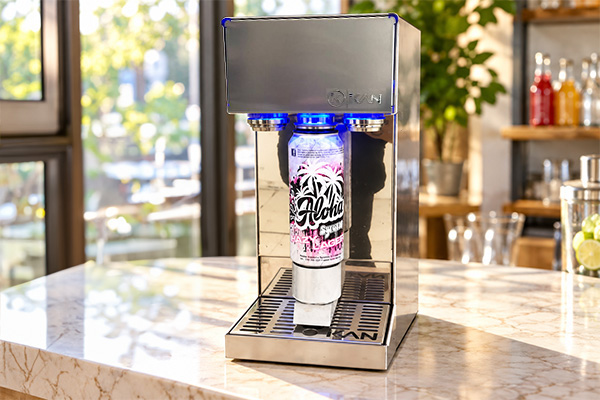
That’s the job of Eazy Canning’s iKAN can seamer.
The iKAN is constructed from food-grade 304 stainless steel and uses professional-grade chucks and rolls. Eazy Canning states that it can accommodate nearly every can size across approximately 200–209 mm diameters.
Its role is simple: Fill the can → Place the lid → Form the seam
The resulting seam provides the mechanical closure that keeps the finished beverage container sealed.
For a small beverage operation, this makes the iKAN an important part of an in-house canning workflow.
FENIX + iKAN
For a beverage producer that wants to handle both filling and seaming, the two machines can work together.
Step 1: Prepare the beverage
The beverage is brewed, mixed, carbonated, filtered, or otherwise prepared according to the product’s requirements.
Step 2: Fill the can
The FENIX fills suitable beverages under controlled pressure.
Step 3: Place the lid
The aluminum end is placed onto the filled can.
Step 4: Seam the can
The can is transferred to the iKAN.
Step 5: Quality check
The finished seam and filled product are inspected according to the producer’s quality-control procedures.
Eazy Canning describes FENIX and iKAN as complementary technologies covering the filling and closing stages of small-scale canning.
When Might Aluminum Make More Sense?
Aluminum can be particularly attractive when:
- lightweight packaging matters
- transportation distances are significant
- breakage needs to be minimized
- the product needs strong light protection
- portability is important
- the beverage is intended for events or takeaway
- closed-loop recycling is a priority
- the brand wants a compact canning workflow
This is especially relevant for beverage startups developing RTD products for retail and direct sales.
Final Takeaway
If the question is specifically which beverage packaging is easier to recycle, aluminum generally has the advantage over glass.
Both materials are recyclable. Glass can be recycled repeatedly, and returnable glass can offer an additional reuse pathway. But aluminum beverage cans currently combine a relatively high consumer recycling rate with high recycled content, strong material value, and exceptionally high closed-loop circularity.
For beverage brands, however, recycling is only one part of the packaging decision.
The right choice also depends on:
product → packaging → production → logistics → consumer use → collection → recycling or reuse
For a beverage startup that chooses aluminum cans, the next question is how to create a practical canning workflow.
Eazy Canning’s FENIX and iKAN cover the two core stages of small-batch canning: filling and seaming. FENIX provides manual counter-pressure filling for suitable beverages, while iKAN forms the final can seam.
That makes compact canning equipment particularly relevant for brands that want to test products, produce smaller commercial batches, and scale their packaging operation as demand grows.
For recycling potential, aluminum has a strong advantage. For reuse, glass can offer a different circular model. For a beverage brand, the best packaging decision depends on which system fits the product and the market, not simply which material sounds more sustainable.

Leave a Reply