
Aluminum vs Plastic: Which Material Has Better Recycling Potential?
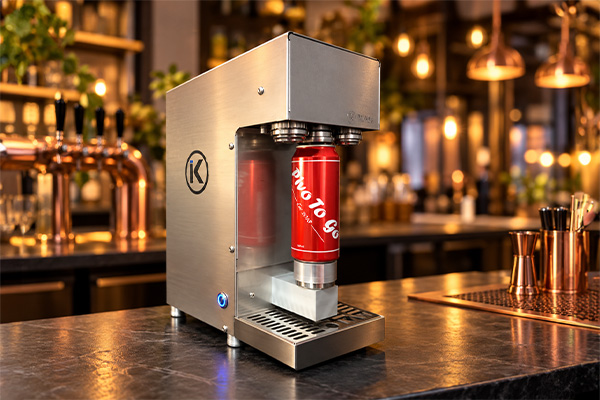
For beverage packaging, aluminum generally has greater recycling potential than plastic, particularly when comparing aluminum cans with PET beverage bottles. Aluminum can be recycled repeatedly without losing its basic material properties, and beverage cans have a well-established recycling stream. Plastic is also recyclable, but recycling performance varies significantly by resin type, product design, collection system, and market.
Choosing between an aluminum can and a plastic bottle is not only a question of packaging cost, weight, or appearance. It can also affect what happens to the package after the consumer finishes the beverage.
In the United States, EPA’s available beverage-container data show that aluminum beverage cans have historically achieved higher recycling rates than PET bottles. EPA’s 2018 data recorded a 50.4% recycling rate for aluminum beer and soft-drink cans, compared with 29.1% for PET bottles and jars. More recent industry data reported a 2023 U.S. aluminum beverage-can recycling rate of 43%, while the net recycling rate for PET bottles was estimated at around 20%.
However, recycling performance depends heavily on geography, collection infrastructure, package design, and consumer behavior. There is therefore no single recycling rate that applies to every aluminum can or plastic bottle worldwide.
For beverage startups deciding how to package a new product, the practical question is:
Which material gives your product the combination of functionality, recyclability, production compatibility, cost, and consumer appeal that your business needs?
Aluminum vs Plastic: Quick Answer
If the comparison is specifically between aluminum beverage cans and PET beverage bottles, aluminum generally has the stronger recycling profile.The conclusion is not that all aluminum packaging is automatically environmentally superior to all plastic packaging.
Life-cycle impact depends on how the material is produced, transported, used, collected, recycled, and ultimately disposed of.
But if the specific question is “Which beverage package generally has stronger recycling potential: an aluminum can or a PET bottle?”, aluminum has several important advantages.
What Makes a Material Recyclable?
Recyclability is more complicated than simply asking whether a package can be recycled.
A useful way to think about recycling potential is to consider several stages:
Collection → Sorting → Processing → Material recovery → Manufacturing → New product
A material has stronger practical recycling potential when it can successfully move through this entire system.
For beverage packaging, important factors include:
- whether consumers have access to collection
- whether sorting facilities accept the material
- whether the material can be efficiently separated
- whether contamination affects processing
- whether there is demand for the recovered material
- whether the recycled material retains useful properties
- whether manufacturers use recycled material in new packaging
This is why “technically recyclable” and “actually recycled” are not the same thing.
A plastic bottle may be technically recyclable but still end up in landfill if it is not collected or sorted.
The same principle applies to aluminum.
A can can be recycled, but it must first enter the appropriate collection and recovery system.
Why Aluminum Has Strong Recycling Potential
Aluminum has a major advantage in recycling:
The material can be recycled repeatedly without losing its fundamental properties.
A used aluminum beverage can can become new aluminum packaging rather than simply becoming waste after one recycling cycle.
This creates the possibility of a relatively strong circular material loop:
Beverage can → Consumer → Collection → Recycling → Aluminum → New beverage can
The Aluminum Association reports that the U.S. aluminum beverage can had a 96.7% closed-loop circularity rate in its latest 2024 KPI report, meaning the recovered aluminum has a particularly strong connection to new can production. The same report states that the average aluminum beverage can contained approximately 71% recycled content.
That is one of the most important differences between aluminum and many plastic packaging applications.
Aluminum Recycling Can Save Significant Energy
Another advantage of aluminum recycling is the amount of energy saved compared with producing primary aluminum.
The Aluminum Association states that recycling aluminum saves approximately 95% of the energy required to produce new aluminum from raw materials.
This makes keeping aluminum in the recycling system particularly valuable.
However, this does not mean producing aluminum has no environmental impact.
Primary aluminum production is energy-intensive, and the environmental profile of an aluminum package depends partly on where and how the aluminum is produced.
The important point is that recycling significantly reduces the need for new primary aluminum.
The more aluminum that remains in circulation, the more material can be supplied through secondary production.
What About Plastic Recycling?
Plastic is not one material.
There are many different types of plastic resin, including:
- PET
- HDPE
- PP
- LDPE
- PVC
- PS
Different plastics have different properties and recycling systems.
For beverage packaging, PET (polyethylene terephthalate) is particularly important because it is widely used for water, soft drinks, juices, and other beverages.
PET can be recycled into new products, including new packaging in appropriate recycling systems.
However, plastic recycling presents several challenges.
These can include:
- different resin types
- contamination
- labels and closures
- additives
- multilayer packaging
- sorting requirements
- degradation of material properties
- limited demand for some recycled plastics
EPA’s data illustrate the difference in recycling performance.
In its 2018 U.S. data, EPA reported a 29.1% recycling rate for PET bottles and jars, compared with 50.4% for aluminum beer and soft-drink cans.
More recent industry estimates also show aluminum beverage cans maintaining a higher recycling rate than PET bottles in the U.S.
These figures are U.S.-specific and should not be presented as universal global recycling rates.
Why Plastic Recycling Is More Complicated
One of the fundamental challenges with plastic is that there are many different material types and product designs.
A recycling facility needs to identify, separate, and process those materials correctly.
Even within PET packaging, the recycling process can be affected by:
- bottle color
- additives
- labels
- closures
- contamination
- multilayer components
- collection quality
Once plastics are collected, they may be processed into flakes or pellets and used in new products.
Some applications can support relatively high-value recycling, including bottle-to-bottle recycling for suitable PET streams.
Other applications may result in the recovered plastic being used for different products.
This is sometimes described as downcycling when the material moves into a lower-value or different application.
Aluminum’s ability to return to essentially the same material category gives it a particularly strong circularity advantage.
Aluminum vs Plastic: Recycling Is Not the Only Consideration
It would be misleading to choose beverage packaging based solely on recycling.
A proper packaging decision should also consider:
- manufacturing impacts
- material weight
- transportation
- product protection
- shelf life
- filling requirements
- consumer behavior
- collection infrastructure
- recycled content
- packaging design
- production volume
For example, aluminum is energy-intensive to produce from virgin material.
Plastic is lightweight and can require less material by weight for certain packaging applications.
Therefore, the environmental comparison should be based on the entire packaging life cycle, not simply the recycling stage.
This is why beverage brands should avoid broad statements such as:
“Aluminum is always environmentally better than plastic.”
Why Aluminum Cans Are Attractive for Beverage Brands
For beverage companies, aluminum offers several characteristics beyond recyclability.
1. Strong recycling infrastructure
Aluminum beverage cans are widely recognized as valuable recyclable materials.
The material’s economic value creates an incentive for collection and recovery.
The Aluminum Association reports that aluminum beverage cans had a material value of approximately $1,338 per ton in its 2024 KPI data, compared with approximately $215 per ton for PET.
This economic value matters because recycling systems depend partly on the value of recovered materials.
2. High recycled content
Using recycled material reduces the need for virgin raw material.
The Aluminum Association’s 2024 data put average recycled content in U.S. aluminum beverage cans at approximately 71%.
That is significantly higher than the recycled-content figure reported for PET bottles in the same industry comparison.
This gives aluminum cans an important circularity advantage.
3. Aluminum can be recycled into new cans
One of aluminum’s strongest characteristics is its ability to return to the same type of product.
A beverage can can be:
Collected → melted → formed → made into another can
The material does not need to become a completely different product before it can be useful again.
This is an important distinction when evaluating long-term recycling potential.
How Canning Equipment Fits Into the Sustainability Decision
Once a beverage brand decides to use cans, the next question is:
How will the beverage actually be filled and sealed?
For a small beverage producer, the answer does not necessarily require a large industrial canning line.
Eazy Canning offers compact manual filling and seaming equipment designed for small and medium production.
Its main systems are:
Together, they cover the two fundamental packaging stages:
Fill the can → Seal the can
FENIX: Counter-Pressure Filling for Suitable Beverages
The FENIX is Eazy Canning’s manual reverse-pressure beverage filling head.
It is designed particularly for controlled filling of carbonated beverages.
According to Eazy Canning, FENIX operates at pressures up to 4 bar and can fill approximately 3–4 cans per minute per head. A dual-head configuration can reach approximately 100–150 cans per hour.
Counter-pressure filling is useful for carbonated products because it helps control foaming during filling.
Eazy Canning also states that the system is designed to minimize oxygen ingress during the filling process.
The FENIX is currently designed around 202-diameter cans, with custom options available on request.
For a beverage startup using aluminum cans, this provides a way to establish a controlled filling process without immediately moving to a fully automated production line.
iKAN: Sealing the Aluminum Can
After filling, the can needs to be closed securely.
That is where the iKAN can seamer comes in.
Eazy Canning’s iKAN is built from food-grade 304 stainless steel and uses professional-grade seaming components. The company states that the machine can seam up to approximately 10 cans per minute and accommodate can diameters from approximately 200 to 209 mm.
This gives beverage startups a compact way to integrate can sealing into a small production workflow.
Aluminum vs Plastic: Which Should a Beverage Startup Choose?
The answer depends on the product.
But if recycling potential is a major priority, aluminum beverage cans have several advantages over PET bottles:
- higher recycling rates in available U.S. beverage-container data
- high recycled content
- strong material value
- strong closed-loop potential
- repeated recyclability
- established beverage-can recovery systems
PET plastic remains recyclable and can support bottle-to-bottle recycling where appropriate collection and processing systems exist.
Therefore, the decision should not be based on a simple statement that one material is “good” and the other is “bad.”
Instead, ask:
Which package provides the right balance of product protection, production requirements, cost, logistics, consumer expectations, and end-of-life recovery for our market?
When comparing aluminum beverage cans with PET plastic bottles, aluminum generally offers stronger recycling potential and a more established closed-loop pathway. Aluminum can be recycled repeatedly, beverage cans have relatively high material value, and current U.S. data show higher recycling performance for aluminum beverage cans than PET bottles.
Eazy Canning’s FENIX filling system and iKAN can seamer provide a compact solution for the two essential stages of small-scale canning: filling and sealing. FENIX uses counter-pressure filling for suitable beverages, while iKAN provides professional can seaming in a compact format.
That makes compact canning equipment particularly relevant for beverage brands that want to start with smaller batches, test demand, and scale production as the business grows.
The material decision determines what your package is made from. The production system determines how efficiently you can turn that package into a finished beverage.

Leave a Reply