
Cans vs. Bottles for Beverages: Which Is Better?
For many small and medium beverage producers, cans offer a practical alternative to bottles because they are lightweight, durable, stackable, and provide strong protection from light and oxygen. They can also simplify shipping and storage while giving brands a large surface for packaging design. However, whether cans or bottles are better depends on the beverage, target market, production process, and packaging goals.
For businesses considering in-house canning, the choice is not only about the container itself. It also affects filling equipment, sealing, transportation, storage, product protection, and branding.
Cans vs. Bottles: What Is the Difference?
The main difference is how each package protects, transports, and presents the beverage.
Cans are typically made from aluminum and provide a lightweight, light-blocking, durable package. Bottles, particularly glass bottles, are familiar to consumers and can create a traditional or premium presentation, but they are heavier and more vulnerable to breakage.
For many modern beverage brands, cans are especially attractive because they combine product protection with efficient logistics and relatively simple storage.
Why Choose Cans for Beverages?
1. Cans Protect Beverages From Light
One of the biggest advantages of aluminum cans is that they block light.
Light exposure can affect the flavor and quality of certain beverages. Beer, for example, can develop unwanted light-struck flavors when exposed to UV light.
Because cans provide a complete barrier against light, they can help protect the beverage from this type of exposure.
2. Cans Are Lightweight and Durable
Cans are considerably lighter than glass bottles and are much less likely to break during transportation or handling.
For beverage producers, this can mean:
- Easier transportation
- Lower shipping weight
- Less risk of breakage
- Easier handling
- More efficient storage
Cans are also stackable, making them practical for warehouses, refrigerators, deliveries, and retail shelves.
3. Cans Can Help With Product Freshness
A properly filled and sealed can provides strong protection against external exposure.
For carbonated beverages, the filling process is particularly important. Counter-pressure filling allows the beverage to be transferred into the can while controlling pressure, helping reduce foaming and oxygen pickup.
After filling, the can needs to be properly sealed. Eazy Canning’s FENIX is designed for counter-pressure filling, while the iKAN creates the final can seam.
4. Cans Are Convenient for Consumers
Cans are lightweight, portable, and resistant to breakage. This makes them useful for beverages intended for:
- Outdoor events
- Festivals
- Travel
- Takeaway
- Retail
- Delivery
- Grab-and-go consumption
They also chill quickly, which is another practical advantage for consumers.
What Are the Advantages of Bottles?
Bottles still have a place in the beverage market.
Glass bottles can communicate a traditional or premium image, and some beverage categories have strong consumer associations with bottled products.
Bottles may therefore make sense when:
- The visual presentation of the container is central to the brand
- Consumers expect the beverage in a bottle
- Reusable packaging is part of the business model
- The product is primarily sold for immediate consumption
However, glass comes with practical disadvantages. It is heavier than aluminum and can break during transportation or handling, increasing shipping costs and potential product loss.
Cans vs. Bottles for Carbonated Beverages
For carbonated beverages, packaging needs to do more than simply hold the drink.
The filling process needs to control pressure and minimize excessive foaming. A counter-pressure filler is designed specifically for this purpose.
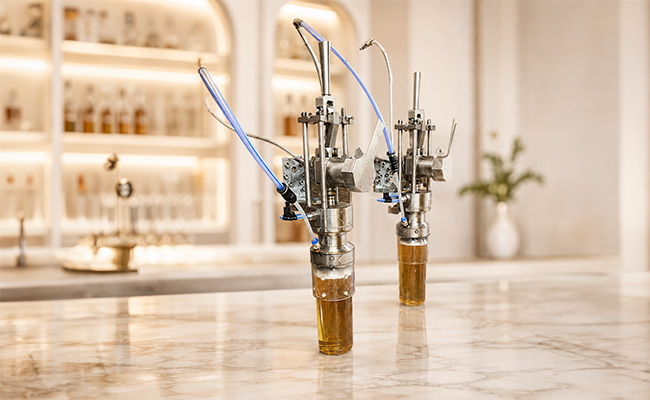
Eazy Canning’s FENIX is a fully manual reverse-pressure filling head designed for small and medium production. It can operate at pressures of up to 4 bar and is fully CIP-able.
After filling, the can is closed using a seamer. The iKAN is Eazy Canning’s compact tabletop can seamer, built with food-grade 304 stainless steel and professional-grade chucks and rolls. It can accommodate nearly every can size across diameters from 200 to 209 mm.
This gives smaller producers a way to handle both filling and sealing without investing in a large industrial canning line.
Cans vs. Bottles: Cost and Logistics
Packaging costs are only one part of the calculation. Producers should also consider transportation, storage, breakage, labor, and production efficiency.
Cans can provide several logistical advantages:
| Cans | Bottles |
| Lightweight | Heavier, especially glass |
| Resistant to breakage | Glass can break during handling |
| Easy to stack | Often require more careful handling |
| Efficient for transportation | Higher transportation weight |
| Compact storage | Can require more storage space |
| Large printable surface | Often require labels |
For small and medium producers, these differences can become increasingly important as distribution expands.
Which Is More Sustainable: Cans or Bottles?
Aluminum cans have a strong sustainability advantage because aluminum is highly recyclable and can be recycled repeatedly without losing its fundamental material properties.
Their lower weight also means less material needs to be transported compared with heavier glass packaging.
However, the environmental impact of packaging depends on the entire lifecycle, including material sourcing, manufacturing, transportation, recycling infrastructure, and how the packaging is used. So sustainability should be evaluated based on the specific market and packaging system rather than on the container alone.
Cans Offer More Branding Space
A beverage can provides a large, continuous surface for branding.
Instead of relying primarily on a front label, brands can use much of the can’s surface for:
- Logos
- Product names
- Colors and graphics
- Product information
- Brand storytelling
- Promotional designs
This can make cans particularly effective for products competing for attention on crowded retail shelves.
Which Beverages Work Well in Cans?
Canning is no longer limited to beer and soda.
Cans are increasingly used for:
- Craft beer
- Cold brew coffee
- Nitro coffee
- Kombucha
- Sparkling beverages
- Ready-to-drink cocktails
- Functional beverages
- Specialty drinks
Eazy Canning specifically provides equipment for small and medium producers working with beverages and small production batches.
For carbonated or nitrogenated products, the filling method is especially important. Counter-pressure filling helps control foaming and gas retention during the filling process.
Should a Small Beverage Producer Choose Cans or Bottles?
For many small beverage producers, cans are worth considering when portability, transportation, product protection, branding, and efficient storage are priorities.
They are particularly attractive for startups and small businesses that want to distribute products beyond their own location.
Canning also does not necessarily require a large automated production line. Compact equipment can allow smaller producers to fill and seal their own products at a more manageable production scale.
How Eazy Canning Makes In-House Canning Possible
Choosing cans is only the first step. The producer also needs a reliable way to fill and seal them.
Eazy Canning’s two core machines address these stages:
FENIX — Can Filler
A manual reverse-pressure filling head designed for controlled filling of beverages, particularly carbonated products. It is fully CIP-able and currently offered for 202 DIA cans.
iKAN — Can Seamer
A compact tabletop seamer designed to create professional can seams. It uses food-grade 304 stainless steel and professional-grade seaming components and can accommodate can diameters from 200–209 mm.
Together, they create a compact filling-and-seaming workflow suitable for small and medium production.
Cans or Bottles: Which Should You Choose?
There is no universal answer for every beverage brand.
Choose cans when you prioritize:
- Lightweight packaging
- Breakage resistance
- Light protection
- Efficient transportation
- Compact storage
- Strong shelf presence
- Portable consumption
- In-house small-batch canning
Consider bottles when you prioritize:
- Traditional product presentation
- A premium glass-bottle aesthetic
- Reusable packaging systems
- A beverage category where bottles are strongly established
For many modern beverage startups, however, cans offer a combination of practical and commercial advantages that make them an increasingly attractive packaging format.
Final Takeaway
Cans are often the more practical packaging choice for beverage producers that need lightweight, durable, stackable, and highly protective packaging. Bottles can still make sense for particular products and brand concepts, but glass comes with additional weight and breakage considerations.
For producers choosing cans, the next question is how to fill and seal them efficiently. Eazy Canning’s FENIX counter-pressure filler and iKAN can seamer are designed to make professional canning accessible to small and medium-sized producers without requiring a full industrial packaging line.
Frequently Asked Questions
Are cans better than bottles for beverages?
For many beverages, cans offer advantages in weight, durability, light protection, transportation, storage, and branding. The best choice ultimately depends on the product and business model.
Are cans better for carbonated drinks?
Cans can be an excellent option for carbonated beverages. A suitable counter-pressure filling process helps reduce foaming and oxygen pickup while supporting carbonation retention.
Are cans cheaper to transport than glass bottles?
Cans are lighter than glass, which can reduce transportation weight and make handling and storage more efficient.
Why are cans popular with beverage startups?
Cans combine product protection, portability, branding opportunities, and efficient logistics. Compact equipment such as the FENIX and iKAN also allows smaller producers to handle filling and seaming without installing a large industrial canning line.
Can Eazy Canning equipment fill and seal cans?
Yes. The FENIX handles the filling stage, while the iKAN handles the can-seaming stage. They are separate machines designed to perform complementary parts of the canning process.
