
What Does It Cost to Start Canning Your Own Beverages?
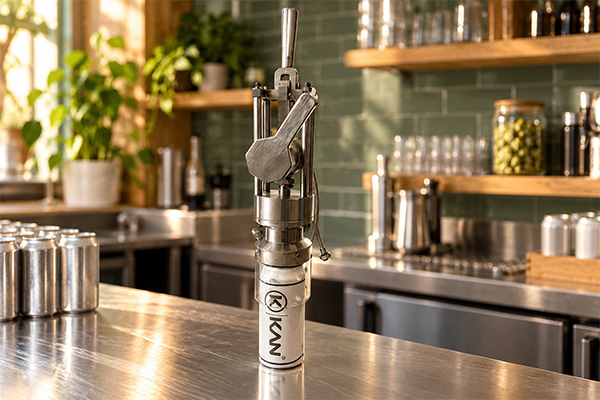
Starting to can your own beverages can cost a few hundred euros for a small test batch if you already have suitable equipment and production facilities. Buying your own canning equipment requires a larger upfront investment: Eazy Canning lists the iKAN can seamer at €3,280, while the FENIX filler requires a separate price quote. You also need to budget for cans and lids, ingredients, labels, cleaning supplies, labor, storage, and any testing or compliance requirements applicable to your beverage.
The total cost depends on three main decisions: how much you plan to produce, whether you buy or outsource canning, and how much equipment and infrastructure you already have. This guide breaks down the major expenses and uses clearly labeled example budgets to help you estimate your own startup costs.
What Are the Main Costs of Starting a Beverage Canning Operation?
The budget has two parts: startup investment and production costs. Keep them separate so you can distinguish the cash needed to start from the cost of making each batch.
| Cost category | Type of cost | What to include |
| Filling and seaming equipment | Initial investment | Filler, can seamer, compatible tooling, and necessary accessories |
| Beverage preparation | Initial or existing equipment | Brewing equipment, tanks, filtration, pumps, or other product-specific tools |
| Cans and lids | Recurring | Empty cans, compatible ends, packaging minimums, and delivery |
| Ingredients | Recurring | Coffee, water, sweeteners, flavorings, extracts, and other recipe components |
| Labels and branding | Recurring or one-time | Labels, sleeves, artwork, and any setup fees |
| Cleaning and sanitation | Initial and recurring | Approved cleaning agents, sanitizers, and suitable cleaning tools |
| Labor | Recurring | Preparation, filling, seaming, inspection, packing, and cleaning |
| Secondary packaging | Recurring | Cartons, trays, dividers, and protective packaging |
| Utilities and storage | Initial and recurring | Electricity, refrigeration where required, workspace, and storage |
| Testing and compliance | Product-dependent | Laboratory work, shelf-life validation, label review, and applicable regulatory requirements |
| Freight, taxes, and working capital | Cash-flow requirement | Shipping, VAT or other applicable taxes, inventory buffers, and money for the next production run |
The amounts depend on the beverage, market, production volume, supplier, packaging design, and equipment configuration. The examples below separate published supplier prices from assumptions used only for planning.
How Much Does Canning Equipment Cost?
Equipment is usually one of the largest upfront expenses for a business that wants to fill and seam cans in-house. A machine’s listed purchase price is not the full cost of setting up production.
Can seamer: iKAN
Eazy Canning’s iKAN can seamer is currently listed at €3,568. Published lease terms vary by business type. The product information lists monthly rates of €130 for breweries and microbreweries and €120 for restaurants, bars, and cafés, with the monthly payment reducing to €100 after 36 months under the stated terms. The linked shop also lists a €1,500 refundable deposit, €300 for delivery and operator training within the EU, and a six-month minimum lease term.
Confirm the current purchase price, lease eligibility, payment schedule, deposit, VAT, delivery, and training costs with the seller before budgeting. Do not compare the monthly lease payment with the purchase price without including the deposit, contract length, and all other charges.
The iKAN is listed with a maximum seaming speed of up to 10 cans per minute. This is a machine specification, not a guarantee that the complete filling, seaming, inspection, and packing workflow will sustain that output.
Also confirm that the can body, lid, and seaming tooling are compatible with your intended format. Do not assume every can can be used without additional requirements.
Can filler: FENIX
The FENIX filling head is designed for counter-pressure filling, particularly for carbonated beverages. Published specifications include operation at up to 4 bar and support for standard 202-diameter cans, with custom options available upon request.
Eazy Canning does not display a purchase price for FENIX on the product page. Request a quote for your intended configuration and confirm whether the quote includes any required accessories or supporting equipment.
What else might an in-house setup need?
Depending on the beverage and existing facilities, you may also need beverage-preparation and filtration equipment, suitable storage, a gas supply and regulation where applicable, cleaning provisions, inspection tools, work surfaces, cartons, and product-specific testing or processing equipment.
Budget rule: calculate the cost of the complete workflow, not just the filler and seamer. The known iKAN price plus a FENIX quote is only a starting point; your final investment depends on the equipment and facilities you already own and the requirements of your product.
How Much Do Empty Cans and Lids Cost?
Cans and lids are recurring expenses. The order quantity, can format, lid option, decoration, and shipping can change both the cost per can and the amount you must pay upfront.
The following are examples from Czech Mini Breweries’ aluminum can listings, checked on 29 October 2026. The listed prices below are excluding VAT.
| Selected 330 ml can option | Pack size | Published price | Approximate price per can |
| Standard silver can with lid, without sleeve | 150 cans | €45–€53 | €0.30–€0.35 |
| Standard silver can with lid, without sleeve | Pallet of 6,480 | €1,652–€1,994 | €0.25–€0.31 |
| Standard silver can with custom sleeve and lid | 150 cans per carton | €90–€99 per carton | €0.60–€0.66 |
These prices apply to specific listed products and variants, not every can on the market. The standard sleeved-can listing states a minimum order of 750 cans (five cartons). It also lists a €100 charge for creating one graphic file, where that service is required. Confirm current minimums, lid options, freight, tax, and artwork charges before placing an order.
Why does order quantity matter?
Suppose you need 1,000 plain cans for your first production run. If the supplier sells them in packs of 150, you need seven packs, giving you 1,050 cans. At the listed pack prices, the initial packaging purchase would be approximately €315–€371 before VAT and shipping, with 50 cans remaining in inventory.
The cost of the 1,000 cans actually used, calculated at the same unit-price range, is approximately €300–€353. These are two different figures: the first is cash paid for the order; the second is the estimated cost assigned to the cans consumed in that batch.
A pallet has a lower unit price at the selected supplier, but it requires a much larger upfront payment and storage space. It may suit a producer with predictable demand, but not a business that is still testing its product.
The supplier warns that empty cans are vulnerable to transport damage and advises customers to allow for a potential 5% failure rate. Inspect the delivery promptly and document any damage according to the supplier’s claim process. Include a reasonable packaging buffer rather than assuming every purchased can will be usable.
What about printed cans or shrink sleeves?
For small batches, compare plain cans with self-adhesive labels against sleeved cans or pre-printed packaging. Sleeves can make the finished pack more distinctive, but minimum orders, artwork fees, and unit prices may be higher.
For example, the supplier’s selected standard 330 ml sleeved-can listing shows €90–€99 per 150-can carton, with a minimum order of 750 cans. That means a minimum packaging commitment of approximately €450–€495 before VAT, delivery, and any applicable artwork charge. A small pilot may therefore be more cash-efficient with plain cans and labels, depending on your brand requirements.
Do not add a separate label allowance to the cost of a sleeved can if the sleeve already provides the required decoration. Avoid double-counting packaging costs.
What Other Costs Should You Include?
Cans and machinery are only part of the budget. A realistic estimate covers the cost of preparing, handling, filling, inspecting, storing, and distributing the beverage.
Ingredients
Calculate ingredient costs from your actual recipe and supplier prices. Specialty coffee, extracts, sweeteners, functional ingredients, and multiple flavorings can have very different cost profiles. Include normal losses where relevant.
Cleaning and sanitation
Budget for appropriate cleaning agents, sanitizers, and tools. The correct products and procedures depend on equipment materials and the beverage. FENIX is listed as compatible with Clean-In-Place (CIP) systems, but confirm the approved cleaning procedure and required supplies for your installation.
Labels and secondary packaging
Include labels, artwork, cartons, trays, dividers, and protective packaging. Check the labeling requirements for the market where you intend to sell the beverage, including ingredient, allergen, net-quantity, and other applicable declarations.
Labor
Labor includes more than the time spent filling cans. Operators may need to prepare the beverage, stage empty cans and lids, fill and seam, inspect finished units, pack cartons, move stock, clean equipment, and complete production records.
Estimate labor across the full workflow. Manual production can require substantial hands-on time, so ignoring setup, cleaning, and handling can understate your true cost per can.
Utilities, refrigeration, and storage
Depending on the product, you may need electricity, water, compressed gas, refrigeration, or additional storage. Do not assume every beverage can be stored at room temperature: storage requirements depend on the formulation and validated processing and safety controls.
Testing, compliance, and working capital
Depending on the beverage and market, you may need formulation support, laboratory analysis, shelf-life validation, specialist processing advice, or regulatory review. Obtain product-specific estimates instead of applying one generic testing allowance to every beverage.
Keep working capital for freight, taxes, inventory, replacement packaging, rejected units, and the next production run. A machine purchase alone does not provide the cash needed to keep production operating.
Example Budget: A 150-Can Test Batch
This illustration assumes you already have access to suitable beverage-preparation and canning equipment. It excludes machine purchases and uses the published price range for a 150-can pack of plain cans with lids. All other figures are planning assumptions, not supplier quotations.
| Expense | Calculation or assumption | Example cost |
| Empty cans and lids | 150 cans at the listed pack price | €45–€53 |
| Ingredients | Assumed €0.30 per can | €45 |
| Labels | Assumed €0.20 per can | €30 |
| Secondary packaging | Assumed €0.15 per can | €22.50 |
| Cleaning and sanitation supplies | Allowance per batch | €25 |
| Labor | 3 hours × assumed €20 per hour | €60 |
| Utilities and incidentals | Allowance per batch | €10 |
| Estimated batch total | Before excluded costs | €237.50–€245.50 |
Under these assumptions, the cost is approximately €1.58–€1.64 per can produced, provided all 150 cans are usable and saleable. If cans are rejected or damaged, the cost per saleable can will be higher.
This example excludes equipment, VAT, shipping, product development, laboratory testing, compliance costs, storage overhead, and any product-specific preservation process.
If you choose sleeved cans instead of plain cans plus labels, replace the plain-can and label costs with the appropriate sleeved-pack cost. However, note that the selected supplier’s standard sleeved cans have a 750-can minimum order, so the cash outlay is much higher than the cost allocated to 150 cans used in a pilot. Include any applicable artwork charge as well.
Example Budget: A 1,000-Can Production Batch
A larger batch spreads some fixed activity costs across more cans, but increases total spending on ingredients and packaging. The following table uses the same supplier pricing and clearly stated assumptions.
| Expense | Calculation or assumption | Example cost |
| Cans and lids consumed | 1,000 cans at approximately €0.30–€0.353 each | €300–€353 |
| Ingredients | Assumed €0.30 per can | €300 |
| Labels | Assumed €0.20 per can | €200 |
| Secondary packaging | Assumed €0.15 per can | €150 |
| Cleaning and sanitation supplies | Allowance per batch | €40 |
| Labor | 8 hours × assumed €20 per hour | €160 |
| Utilities and incidentals | Allowance per batch | €20 |
| Estimated batch cost | Based on cans consumed, before excluded costs | €1,170–€1,223 |
On a can-consumed basis, the estimated cost is approximately €1.17–€1.22 per can produced, assuming no rejected units. This excludes equipment, shipping, taxes, testing, storage overhead, and other omitted costs.
Cash flow differs from cost allocation. If you must buy seven 150-can packs, the actual packaging purchase is approximately €315–€371 before VAT and delivery, giving you 1,050 cans. Using that purchase outlay instead of the cost allocated to 1,000 cans, the initial cash spend for the batch and packaging order would be approximately €1,185–€1,241, with 50 unused cans left in inventory.
This distinction matters when planning startup cash. Unused cans are not necessarily wasted; they may be used for a later batch, provided they are stored correctly and remain suitable for production.
What Does It Cost to Start Canning In-House?
For an in-house setup using iKAN and FENIX, separate the known equipment price from the items that need a quote or depend on your existing facilities.
| Startup investment | Budgeting approach |
| iKAN seamer | Current published purchase price: €3,568; confirm final quote and terms |
| FENIX filler | Request a quote from Eazy Canning |
| Beverage preparation | Include equipment you do not already own |
| Initial packaging inventory | Cost the actual can format, lids, decoration, minimum order, and freight |
| Cleaning and inspection supplies | Determine requirements from the equipment and process instructions |
| Workspace, refrigeration, and utilities | Assess according to beverage type and production volume |
| Testing and compliance | Obtain product- and market-specific estimates |
| Working capital | Set aside money for packaging replenishment and normal operating costs |
The published iKAN price gives you a starting point, but it would be misleading to state one total cost for a complete in-house setup without the FENIX quote and information about your existing infrastructure.
The best investment is not necessarily the setup with the lowest purchase price. It is the setup that can meet your production target and quality requirements without creating avoidable bottlenecks or extra costs.
Use these formulas to estimate your own costs
Initial cash required
Equipment and setup + initial packaging purchases + launch/testing costs + working-capital reserve
Batch production cost
Packaging consumed + ingredients + labels + secondary packaging + labor + cleaning + utilities + other variable costs
Cost per saleable can
Total relevant batch costs ÷ number of acceptable finished cans
Use the cost of packaging consumed when calculating batch cost, but use the full purchase amount when estimating upfront cash requirements. Do not count unused packaging as consumed in the batch, and do not count rejected cans as saleable output.
Is It Cheaper to Can In-House or Outsource?
Neither option is always cheaper. Outsourcing reduces the need to purchase and maintain your own canning equipment, while in-house production can offer more control over scheduling and small-batch experiments. The right decision depends on how often you produce, the amount you can sell, the minimum quantities available, and the full service quote.
As one European example, Cannery’s mobile canning service publishes these starting rates:
| Service option | Published starting rate | Published minimum and inclusions to check |
| Full service, cans supplied by provider | €0.39 per can | Filling minimum 4,500 cans; lid, up to 200 km transport, machine time, and operator listed; boxes extra |
| Canning service with cans pre-shipped | €0.37 per can | Filling minimum 4,500 cans and minimum of two pallets stated; cans are prepaid; confirm the exact order and material terms |
| Canning only, customer supplies cans | €0.22 per can | Filling minimum 4,500 cans; machine time, operator, and up to 200 km transport listed; boxes extra |
These are provider-specific “from” prices, not universal contract-canning rates. The page does not establish a final all-in price for every location or product, so confirm VAT, transport beyond the stated distance, boxes, packaging specifications, and all exclusions in writing.
At the published €0.39 starting rate, the service charge for a 4,500-can full-service run would start at €1,755, before any items not included in the quote. At €0.22 per can, canning-only service for 4,500 cans would start at €990, but you would also supply and pay for the cans, lids, and any other excluded packaging.
A service with a 4,500-can minimum may not be a practical option for a 150-can pilot. Check minimums before comparing unit prices.
| Consideration | In-house canning | Outsourced canning |
| Initial equipment investment | Higher | Usually lower |
| Minimum batch size | Depends on your workflow | Often set by the service provider |
| Scheduling | More direct control, subject to staffing and preparation | Depends on provider availability |
| Cost per can | Includes consumables, labor, overhead, and equipment cost | Depends on the quote, volume, and included materials |
| Small product trials | Can suit frequent small tests | May be restricted by minimum quantities |
| Maintenance responsibility | Your business manages its equipment | Provider manages its own canning equipment |
For a fair comparison, request an outsourcing quote for your actual beverage, quantity, can format, and location. Compare it with your in-house variable costs, annual equipment ownership costs, labor, and the number of cans you expect to produce.
How Can You Reduce Your Initial Canning Budget?
The aim is not simply to spend less. It is to avoid committing too much cash before you understand demand and the full production requirements.
Start with a realistic pilot. Test the recipe, packaging, filling workflow, and customer response before building a large inventory.
Compare packaging minimums, not just unit prices. Plain cans with labels may be more economical for an early batch than sleeved cans with a high minimum order. Consider both the cost per can and the amount you must pay upfront.
Use suitable existing infrastructure. If you already have appropriate beverage-preparation, refrigeration, and cleaning facilities, you may not need to purchase every component immediately. Confirm that the existing equipment meets the relevant process requirements.
Price the entire workflow. A low-priced seamer does not remove the need for a filler, compatible packaging, cleaning, inspection, storage, and quality checks.
Track cost per saleable can. Record materials used, labor hours, rejected cans, cleaning time, and packaging losses. Use measured costs to improve estimates for later batches.
Keep a cash reserve. Packaging inventory, freight, testing, and production delays can create cash needs that are easy to miss when focusing only on equipment prices.
Final Takeaway
The cost of starting a beverage canning operation depends on more than the price of a filler and a seamer. Packaging, ingredients, labels, labor, cleaning, storage, freight, testing, and the product-specific requirements for safe production can all affect the budget.
Eazy Canning’s iKAN can seamer provides a published equipment price to help with initial planning, while the FENIX filling head requires a separate quote. Start with your planned batch size, obtain current supplier prices, and calculate both the upfront cash required and the recurring cost per saleable can.
A realistic budget helps you compare in-house and outsourced production, avoid tying up too much cash in packaging, and scale when demand justifies the investment.
Pricing note: equipment, packaging, and service prices in this guide were checked on 29 October 2026. Supplier prices, availability, tax treatment, shipping, minimum quantities, and lease terms can change. Confirm all terms directly before purchasing.
