
What Equipment Does a Beverage Startup Actually Need to Start Canning?
Starting a beverage brand is one thing. Producing that beverage consistently in cans is another.
Once a startup moves beyond recipe development and decides to package its product, a practical question comes up:
What equipment do we actually need to start canning?
It is easy to assume that starting a canning operation means buying a complete industrial production line. For many beverage startups, that is not necessary.
Small and growing beverage producers can build a more compact workflow around the equipment and processes they actually need. Depending on the beverage, production volume, and existing facilities, a startup may need a filling system, a can seamer, cleaning equipment, labeling and coding tools, storage, and a basic quality-control process.
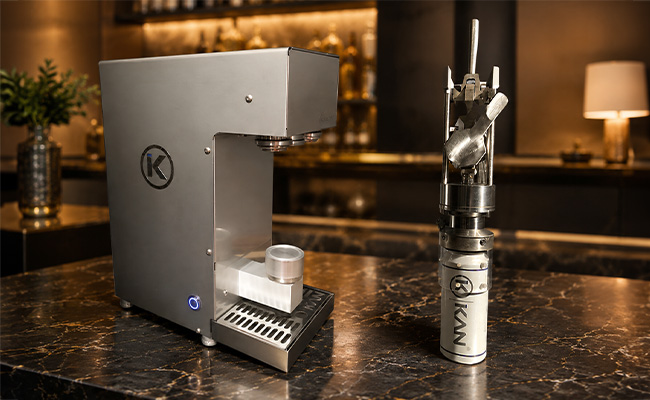
Eazy Canning is specifically focused on this type of production. Its FENIX filling system and iKAN can seamer are designed for small and medium production, including beverage startups, coffee shops, restaurants, bars, and microbreweries.
This guide explains what a beverage startup should consider before buying equipment and how to build a practical canning workflow without investing in more machinery than the business actually needs.
1. Beverage Preparation Equipment
The first part of a canning operation happens before the can ever reaches the filling machine.
Your beverage needs to be prepared consistently before it can be packaged.
The equipment required depends heavily on the product.
A beverage startup might need:
- mixing tanks
- brewing equipment
- filtration
- pumps
- refrigeration
- carbonation equipment
- nitrogen equipment
- temperature-control systems
- measuring equipment
A cold brew coffee producer, for example, will have a very different preparation setup from a kombucha producer or a craft soda company.
The important point is that FENIX and iKAN do not replace beverage-production equipment.
They handle packaging.
FENIX fills the beverage into the can, while iKAN closes the filled can.
So before purchasing canning equipment, a startup should make sure its beverage-production process is already capable of delivering a consistent product.
2. A Can Filler
The next major component is the filler.
This is the equipment that transfers your finished beverage into the empty can.
The choice of filler is particularly important because filling affects:
- product loss
- foam
- oxygen exposure
- carbonation
- fill consistency
- production speed
For some beverages, a simple filling method may be sufficient.
For carbonated or nitrogenated beverages, however, controlling pressure becomes much more important.
This is where the FENIX can filling system is designed to help.
FENIX: A Compact Filling Solution for Beverage Startups
FENIX is Eazy Canning’s manual beverage can filling head designed for filling under pressure.
The system uses a patented clamping mechanism that locks inside the can neck and creates a secure seal during filling. It supports counter-pressure filling up to 4 bars, helping minimize foaming and product loss.
According to Eazy Canning, the standard FENIX is designed for 202-diameter cans, with custom sizes available on request. Each filling head can fill approximately 3–4 cans per minute, while a dual-head configuration can reach approximately 100–150 cans per hour.
FENIX is also fully compatible with Clean-In-Place (CIP) systems, which is important when hygiene and repeatable cleaning are part of the production process.
FENIX is particularly relevant for:
- beverage startups
- craft beverage producers
- microbreweries
- coffee shops
- cold brew producers
- nitro coffee producers
- restaurants and bars
- small-batch beverage businesses
Eazy Canning positions FENIX specifically as a way for beverage startups to launch products without immediately committing to expensive automated filling lines.
3. A Can Seamer
Once the beverage is in the can, it needs to be closed.
This is the job of the can seamer.
The seamer creates the double seam that joins the can body and lid.
A reliable seam is critical because the package needs to remain closed during:
- storage
- transportation
- handling
- retail
- consumption
A poor seam can lead to leakage, package failure, contamination, or product loss.
For a startup, the can seamer is therefore not simply the final step of the process.
It is one of the most important pieces of packaging equipment.
iKAN: Compact Can Seaming for Small-Batch Production
Eazy Canning’s iKAN is a compact automatic can seamer designed for small and medium producers.
According to Eazy Canning, iKAN can seam up to 10 cans per minute and supports cans from approximately 200 ml to 1000 ml. It accommodates can diameters from 200 to 209.
The machine measures approximately:
44 cm × 18 cm × 35 cm
and weighs around 18 kg. It uses food-grade stainless steel and aluminum and is designed to fit into compact production environments.
This makes iKAN particularly relevant to startups that don’t have space for a large industrial seaming machine.
4. Cleaning and Sanitation Equipment
Canning equipment comes into direct contact with the beverage.
That means sanitation needs to be part of the workflow from the beginning.
A startup should consider:
- cleaning chemicals appropriate for its process
- potable water
- hoses
- sanitation tools
- cleaning tanks or systems
- drainage
- food-safe surfaces
- equipment-specific cleaning procedures
For some setups, a dedicated CIP system may be appropriate.
FENIX is fully CIP-compatible, allowing the filling system to be cleaned without requiring extensive disassembly.
Cleaning should not be treated as something that happens only at the end of the day.
The production workflow should define:
what gets cleaned, when it gets cleaned, how it gets cleaned, and how cleaning is verified.
5. Can Preparation and Handling
Cans themselves need to be incorporated into the workflow.
A startup should plan for:
- empty can storage
- lids
- can handling
- can rinsing or preparation where appropriate
- protection from contamination
- movement between filling and seaming
The process should minimize unnecessary handling.
The basic principle is simple:
Clean cans in → controlled filling → immediate closing → inspection.
For pressure-filled beverages, Eazy Canning’s recommended workflow places the lid on the filled can and then moves it directly to the iKAN seamer.
6. Quality-Control Equipment
Quality control is another part of the canning setup that is sometimes overlooked.
A startup needs to verify that the beverage is not only being produced but packaged consistently.
Depending on the product, quality-control procedures may include checking:
- fill level
- seam quality
- leaks
- carbonation
- temperature
- appearance
- batch consistency
- product taste
- packaging condition
For the iKAN, Eazy Canning recommends monitoring seams and inspecting finished cans for issues such as dimensional inconsistency and leaks. Its guidance also suggests establishing a repeatable quality checklist during production.
The exact testing program should be developed according to the beverage, production process, and applicable regulatory requirements.
When You Only Need iKAN
You may only need the iKAN if you already have a suitable filling process.
For example, your business might already have:
- an existing filler
- a production system that fills cans
- another suitable filling machine
- a beverage-specific filling process
In this situation, purchasing another filler may duplicate equipment you already have.
You can use iKAN as the closing stage.
The workflow becomes:
Existing filling system → iKAN → labeling → coding → storage
This can be the most practical option for a startup that already has filling covered.
When You Need FENIX + iKAN
If you are building your core canning process from scratch, the two machines can work together.
The workflow is:
FENIX filling → lid placement → iKAN seaming
Eazy Canning describes this as the basic complete canning workflow for its two machines. FENIX fills under counter-pressure, after which the filled can is transferred to iKAN for professional double seaming.
This setup is particularly relevant when you need both:
- controlled beverage filling
- reliable can closure
How Much Production Can FENIX and iKAN Handle?
This is another important consideration.
The FENIX filling head operates at approximately 3–4 cans per minute per head, while a dual-head configuration can reach approximately 100–150 cans per hour, according to Eazy Canning.
The iKAN can seam up to approximately 10 cans per minute.
That means the filler and seamer have different nominal capacities.
Your real production output will depend on the entire workflow, not just the fastest machine.
For example:
FENIX → seaming → labeling → coding → packing
If filling is the slowest stage, buying a faster seamer does not automatically increase total production.
This is why startups should calculate line capacity, rather than looking at one machine’s maximum speed.
What Does a Beverage Startup Actually Need?
A beverage startup does not necessarily need a full industrial canning line.
The right setup depends on the beverage, production volume, existing equipment, and growth plans.
At minimum, a startup needs a reliable way to:
prepare → fill → seal → label → code → inspect → store
If filling is already covered, iKAN may be all you need for the canning stage.
For startups, the biggest advantage of this approach is not simply the size of the machines.
It is the ability to start at a manageable production scale, test products, control your schedule, and increase capacity as demand develops.
Eazy Canning positions both machines specifically for small and medium producers, with FENIX designed for controlled beverage filling and iKAN designed for compact, professional can seaming.
The smartest equipment investment is therefore not necessarily the biggest one.
It’s the setup that solves your current production problem while leaving your business room to grow.
