
What Makes a Beverage Product Retail-Ready?
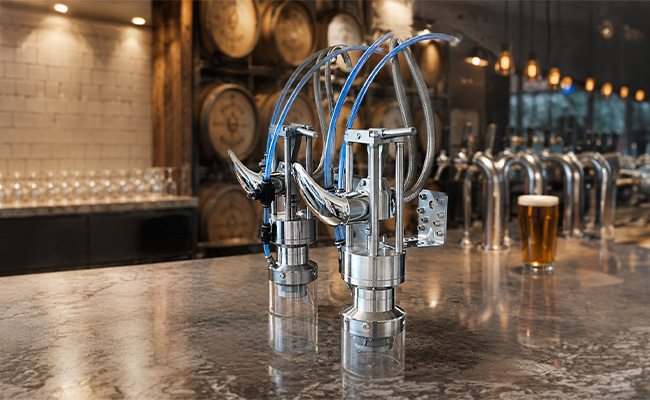
Creating a great beverage is only the first step.
A recipe can taste excellent, customers can love it, and the branding can look professional, but that does not automatically make the product ready for retail.
Selling through supermarkets, independent shops, cafés, distributors, events, or other retail channels requires a beverage to work as a complete commercial product.
That means more than what is inside the can.
For beverage startups, this can be one of the biggest steps between having a product and having a business.
This is also where in-house canning can become valuable.
Eazy Canning provides compact filling and seaming equipment designed for small and medium beverage producers, including startups that want to test products, prepare retailer samples, launch limited production runs, and increase production as demand develops. Its two core systems are the FENIX can filler and iKAN can seamer.
What Does “Retail-Ready” Actually Mean?
A retail-ready beverage is a product that has been developed and packaged to meet the practical requirements of selling outside the business that produced it.
That includes several different areas:
- Product consistency
- Packaging
- Can integrity
- Filling quality
- Seam quality
- Labeling
- Batch identification
- Storage
- Transportation
- Quality control
- Production repeatability
- Regulatory compliance
- Commercial presentation
The exact requirements vary by country, beverage category, retailer, and distribution model.
A product sold directly from a café may have different requirements from a beverage entering a supermarket distribution network.
So “retail-ready” should not be treated as one universal certification.
It is better understood as a production and commercial readiness standard.
The product needs to survive the journey from production to customer while remaining correctly packaged, identifiable, presentable, and consistent.
1. Packaging Has to Look Like a Product, Not a Prototype
One of the clearest differences between a test beverage and a retail product is packaging.
A sample can be served in:
- a temporary bottle
- a plain container
- a cup
- an unlabeled can
A commercial product cannot rely on that.
The package becomes part of the brand.
For a canned beverage, this means thinking about:
- Can format
- Can size
- Label or printed artwork
- Lid
- Seam
- Product information
- Lot/date coding
- Secondary packaging
Eazy Canning specifically positions compact canning as a way for beverage startups to move beyond temporary packaging and create professionally packaged products suitable for market testing and early commercial production.
That transition is important.
A retailer needs to be able to look at the product and immediately understand what it is, who makes it, and why a customer would want to buy it.
2. The Can Needs a Reliable Closure
A beautiful label cannot compensate for a poor package.
The can must close properly.
For canned beverages, the seam is one of the most important parts of the packaging process.
The can body and lid need to form a reliable double seam capable of maintaining package integrity during handling, storage, transportation, and sale.
This is why the can seamer is such an important part of a small beverage production setup.
Eazy Canning’s iKAN is designed specifically for small and medium producers and uses professional-grade chucks and rolls to create consistent seams. The machine can seam up to 10 cans per minute and accommodates can sizes from approximately 200 ml to 1000 ml, with diameters from 200 to 209.
For a startup, this provides an alternative to immediately investing in a large industrial canning line.
3. The Filling Process Matters Too
Seaming is only half of the packaging process.
Before the can can be closed, the beverage needs to be filled correctly.
That sounds simple, but filling can become challenging when working with:
- Carbonated drinks
- Beer
- Kombucha
- Sparkling beverages
- Nitro coffee
- Cold brew
- Other beverages sensitive to oxygen or foaming
For these products, uncontrolled filling can lead to excessive foam, product loss, inconsistent fills, or unwanted oxygen exposure.
Eazy Canning’s FENIX is a manual filling head designed specifically for carbonated beverages and counter-pressure filling. It operates at up to 4 bars and is intended to minimize foaming and product loss during filling.
The standard FENIX configuration is designed for 202-diameter cans, with custom sizes available on request. Each head can fill approximately 3–4 cans per minute, while a dual-head setup can reach approximately 100–150 cans per hour.
That makes FENIX particularly relevant to startups that need controlled filling without immediately moving to a large automated system.
4. Fill Consistency Is Part of Being Retail-Ready
Retail products should not only look consistent.
They should also contain the expected amount of product.
A production process should therefore monitor fill levels and identify problems such as:
- Underfilled cans
- Overfilled cans
- Excessive foam
- Product loss
- Inconsistent fills
This becomes especially important as production volumes increase.
A startup might notice a small variation when producing 50 cans.
The same variation becomes a much bigger operational problem when producing thousands.
That is why retail readiness should include a repeatable filling procedure and quality checks.
5. Labeling Needs to Be Complete and Clear
A retail beverage needs more than a logo.
Depending on the product and market, its packaging may need information such as:
- Product name
- Brand
- Ingredients
- Allergen information where applicable
- Net quantity
- Nutrition information where required
- Producer information
- Storage instructions
- Date information
- Batch or lot identification
- Applicable warnings or regulatory statements
The precise requirements depend on the jurisdiction and beverage category.
For that reason, a startup should verify its labeling requirements with the relevant regulatory authority or a qualified food-labeling professional before going to market.
The important point is that retail readiness includes compliance, not just attractive design.
6. Quality Control Needs to Be Repeatable
Retailers expect consistency.
That means quality control cannot depend entirely on someone looking at the finished cans and saying: “They look fine”.
A retail-ready production process should define what is checked and when.
Depending on the beverage, that might include:
Product checks
- Flavor
- Appearance
- Aroma
- Temperature
- Carbonation
- Other product-specific characteristics
Packaging checks
- Fill level
- Can condition
- Seam quality
- Leaks
- Label placement
- Coding
Process checks
- Batch records
- Cleaning procedures
- Equipment condition
- Production quantities
Eazy Canning’s startup guidance emphasizes monitoring the filling and seaming process, checking seams, and creating repeatable quality-control procedures as part of establishing an in-house canning operation.
7. Hygiene Is Part of Retail Readiness
A retail product needs a controlled production environment.
That means sanitation should be considered before purchasing packaging equipment.
The production process should account for:
- Equipment cleaning
- Beverage-contact surfaces
- Hoses
- Tanks
- Filling equipment
- Work surfaces
- Can handling
- Water
- Cleaning chemicals
- Waste and drainage
FENIX is fully compatible with Clean-In-Place systems, which can help integrate cleaning into a professional production workflow. It is constructed from food-grade stainless steel.
However, the machine is only one part of sanitation.
The entire production process needs appropriate hygiene procedures.
8. Transportation Has to Be Considered
A beverage can experience a lot between production and purchase.
It may be:
Produced → packed → transported → unloaded → stored → displayed → purchased
The packaging needs to survive that process.
That means considering:
- Can durability
- Seam integrity
- Secondary packaging
- Cases or trays
- Palletization
- Handling
- Temperature
- Transport time
This is another reason professional packaging matters.
The product is no longer simply being handed to a customer across the counter.
It is entering a supply chain.
9. The Can Needs to Protect the Product
One reason beverage startups increasingly use cans is that the package itself can provide useful product protection.
Eazy Canning highlights aluminum cans as a packaging format offering protection from light and oxygen, while also providing a lightweight format suitable for transportation and retail.
For many beverage categories, packaging therefore serves several purposes at once:
Protect the product.
Present the brand.
Make distribution practical.
Give the customer a convenient package.
That is why choosing packaging should happen relatively early in the product-development process.
10. The Product Needs to Be Commercially Repeatable
A beverage can be retail-ready from a packaging perspective and still not be ready as a business.
Why?
Because retailers need supply.
If a store sells your beverage and customers like it, the retailer may want to reorder.
That creates a new question:
Can you produce it again?
A startup that can produce 200 cans for a product launch but cannot reliably reproduce them may not be ready for a major retail rollout.
This is where production planning becomes important.
When Does a Startup Need FENIX + iKAN?
A startup should consider FENIX + iKAN when it needs to establish both sides of the packaging process:
Filling + seaming.
For example, a new beverage brand may already have:
- brewing equipment
- mixing tanks
- refrigeration
- ingredients
but no canning equipment.
It needs a way to get the beverage into the can and close it professionally.
For suitable beverages, FENIX can provide the filling stage while iKAN handles the seam.
Eazy Canning specifically describes the two machines as a complete compact canning solution when used together.
When Is a Beverage Truly Retail-Ready?
A beverage is not retail-ready simply because it tastes good.
It becomes retail-ready when the product, packaging, production process, quality control, labeling, storage, and supply process all work together.
For startups, the good news is that becoming retail-ready does not necessarily require jumping straight into a large industrial canning operation.
If you need both filling and seaming, FENIX + iKAN can provide the core of a compact in-house canning workflow. FENIX handles the filling stage, particularly for suitable carbonated beverages, while iKAN creates the final seam.
The objective is not to buy the most equipment possible.
It is to build a process that produces a beverage that looks professional, performs consistently, can be properly identified and handled, and can be produced again when the retailer places the next order.
Explore FENIX and iKAN today and find the right canning setup for your beverage business.
