
How to Choose a Can Size for a New Beverage Brand
Choosing the right can size for a new beverage depends on more than how much liquid the can holds. The right format should match your product positioning, target price, serving occasion, retail strategy, shipping costs, and consumer expectations.
For many beverage startups, the most common formats to evaluate are 200 ml, 250 ml, 330 ml, 355 ml, 440 ml, 500 ml, and 1,000 ml. Smaller cans can support premium positioning and controlled portions, while larger formats can offer stronger value perception and work well for sharing or longer consumption occasions.
There is no universally correct can size. The best choice is the one that fits how customers are expected to buy, use, and perceive your beverage.
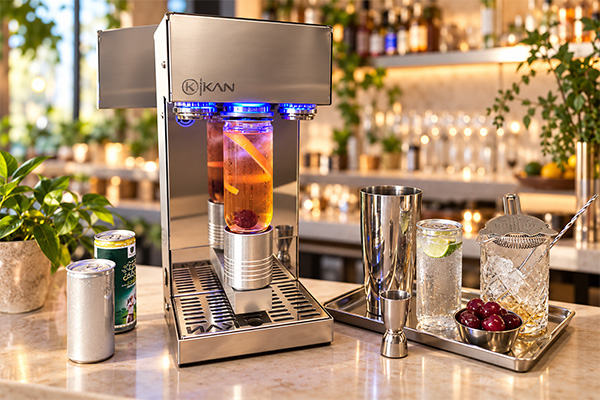
For startups that want flexibility while testing different formats, Eazy Canning’s iKAN can seamer supports can sizes from 200 ml to 1,000 ml, allowing small and medium beverage producers to work across a broad range of package volumes.
Quick Answer: Which Can Size Should You Choose?
| Can Size | Typical Positioning | Potential Use Case |
| 200 ml | Premium, small serving | Functional drinks, mixers, children’s beverages, premium samples |
| 250 ml | Premium/convenient | Energy drinks, cocktails, specialty beverages |
| 330 ml | Standard/premium | Craft beverages, soft drinks, beer, kombucha |
| 355 ml | Mainstream | Soft drinks, energy drinks, ready-to-drink beverages |
| 440 ml | Larger single serving | Craft beer, energy drinks, specialty beverages |
| 500 ml | Value/larger serving | Beer, iced tea, functional drinks, soft drinks |
| 1,000 ml | Large/value format | Sharing, foodservice, specialty beverages, larger take-home formats |
These categories are general positioning guidelines rather than fixed industry rules. The same can size can serve very different products depending on branding, pricing, market, and distribution.
The most important question is not “What can size is popular?”
It is:
“What can size makes the most sense for how customers will buy and consume this specific beverage?”
1. Start With the Serving Size
The first factor to consider is how much of your beverage customers are expected to drink at one time.
A 200 ml can communicates something very different from a 1,000 ml can.
For example:
- A 200–250 ml can can work well when the product is intended as a controlled, premium, or concentrated serving.
- A 330–355 ml can is suitable for many everyday single-serving beverages.
- A 440–500 ml can provides a larger individual serving.
- A 1,000 ml format is more appropriate when the product is intended for sharing, extended consumption, or take-home use.
Think about the actual consumption occasion.
Is the customer drinking your beverage:
- with lunch?
- after exercise?
- during a commute?
- at a party?
- at a restaurant?
- at a music event?
- at home?
- over several hours?
The answer can help determine whether a smaller or larger package makes more sense.
2. How Can Size Affects Product Positioning
Can size becomes part of your brand communication.
A small can can make a product feel more controlled, specialized, or premium. A larger can can communicate value, generosity, or longer consumption.
200 ml
A 200 ml can is useful when portion control or premium presentation is important.
It may suit:
- premium mixers
- functional beverages
- concentrated drinks
- children’s products
- premium tasting formats
- small servings
For a high-value beverage, a smaller package can also allow the brand to maintain a manageable retail price while keeping the perceived value of the product high.
250 ml
A 250 ml can occupies a similar premium/convenience position.
It can be appropriate for:
- energy drinks
- ready-to-drink cocktails
- premium soft drinks
- functional beverages
- specialty drinks
This format can be particularly useful when the customer does not need a large serving.
330 ml
The 330 ml format is a familiar single-serving size across many beverage categories.
It can work well for:
- craft beer
- soft drinks
- kombucha
- specialty beverages
- ready-to-drink products
For a startup, 330 ml can also provide a useful balance between portion size, product cost, shelf presence, and consumer familiarity.
355 ml
The 355 ml format is common in markets where beverage consumers are accustomed to this serving size.
It can be relevant for:
- soft drinks
- energy drinks
- ready-to-drink beverages
- flavored beverages
- mainstream and premium products
If your target market already expects beverages in this format, choosing 355 ml may reduce friction at the point of purchase.
440 ml
A 440 ml can offers more volume without moving all the way to a 500 ml serving.
It can work well for:
- craft beer
- premium beverages
- energy drinks
- specialty soft drinks
It can also provide a larger visual presence on a retail shelf.
500 ml
A 500 ml can communicates a relatively generous individual serving.
It can be appropriate for:
- beer
- iced tea
- soft drinks
- functional beverages
- energy drinks
- larger single-serving products
The trade-off is that you are putting more product into every package. That affects ingredient costs, packaging costs, shipping weight, and the price customers may expect to pay.
1,000 ml
A 1,000 ml can is a fundamentally different proposition.
Instead of a typical single-serving format, it can be positioned around:
- sharing
- longer consumption
- take-home use
- foodservice
- value
- larger-format specialty beverages
For some brands, the larger format can become part of the product’s differentiation.
3. Can Size and Price Point Are Connected
Can size affects how customers perceive the price.
Imagine two products:
Product A: 200 ml at €2.50
Product B: 500 ml at €3.50
The customer is not simply comparing €2.50 with €3.50.
They are also comparing:
- price per serving
- amount of product
- expected consumption
- perceived value
- product positioning
- brand quality
This means you should decide on the target retail price and target serving size together.
Before selecting the can, estimate:
Target retail price → target product volume → cost per can → margin → expected customer value
A larger can does not automatically create a better value proposition if the additional product significantly increases your production and distribution costs.
Similarly, a smaller can does not automatically justify a premium price.
Your brand, recipe, ingredients, positioning, and sales channel all matter.
4. Consider Retail Shelf Space
Can size also affects how your product appears on a retail shelf.
Shelf space is limited, so packaging needs to work visually as well as commercially.
Consider:
- Can height
- Can diameter
- Front-label visibility
- Brand recognition
- Number of cans that fit in a case
- Number of cases that fit on a shelf
- How the product looks next to competitors
A larger format may create stronger shelf presence, but it also occupies more physical space.
A smaller format may allow more units to be displayed, but your branding needs to remain highly visible at a smaller package size.
This is particularly important for new brands.
If customers do not already know your product, the can needs to communicate the brand and product category quickly.
5. Think About Shipping and Distribution
Shipping is another reason not to choose a can size based only on consumer preference.
Every additional milliliter means additional beverage weight.
A larger can can therefore affect:
- shipping weight
- pallet utilization
- case dimensions
- warehouse space
- transportation costs
- delivery costs
- handling
The impact becomes particularly important when your business moves from local direct sales to distributors or wider retail.
A product that works perfectly for a local café may require a different packaging strategy when shipped hundreds or thousands of kilometers.
Calculate your distribution economics before committing to a format.
6. Choose the Can Size Based on Your Sales Channel
Your distribution model can change the right answer.
Direct-to-consumer
If you sell directly from your own location, events, or online channels, you may have more freedom to experiment.
You can test multiple formats and see which customers actually prefer.
Cafés and restaurants
For foodservice, serving size and menu positioning become especially important.
A 250 ml can might work as an individual premium beverage, while 500 ml may be more appropriate for a larger takeaway serving.
Retail stores
Retail requires greater attention to:
- shelf space
- consumer familiarity
- price points
- case configuration
- competitor packaging
Events and festivals
For events, portability and consumption occasion can become more important.
A smaller can may be convenient for short consumption occasions, while a larger can can reduce the number of purchases needed during a longer event.
7. Do You Need to Commit to One Can Size?
Not necessarily.
A beverage brand can eventually develop multiple formats for different channels.
For example:
330 ml → core retail product
250 ml → premium or functional product
500 ml → larger serving
1,000 ml → foodservice or sharing format
However, startups should be careful about introducing too many packaging variations too early.
Every additional format can increase:
- packaging inventory
- labeling requirements
- storage requirements
- production complexity
- SKU management
- purchasing commitments
If you are still testing product-market fit, starting with one primary can format can make operations simpler.
Once demand is established, additional sizes can be tested strategically.
8. Test the Can Size Before Scaling
If you are uncertain between two formats, you do not necessarily need to make the decision entirely on paper.
Run a controlled market test.
For example, you could test:
330 ml vs. 500 ml
with the same beverage and compare:
- customer preference
- selling price
- sales volume
- repeat purchases
- retailer feedback
- shipping economics
- production costs
This can reveal something that theoretical calculations cannot: what customers actually choose.
For a new beverage brand, that information can be more valuable than simply following the most common packaging format.
9. How Eazy Canning’s iKAN Supports Different Can Sizes
Choosing a can size becomes easier when your canning equipment does not force you into one package format.
Eazy Canning’s iKAN Can Seaming Machine is designed for small and medium beverage producers and supports can sizes from 200 ml to 1,000 ml. It can seam up to 10 cans per minute and accommodates can diameters from approximately 200 to 209 mm.
That range covers the major formats many beverage startups consider:
200 ml → 250 ml → 330 ml → 355 ml → 440 ml → 500 ml → 1,000 ml
This flexibility can be particularly useful when a brand is still testing packaging decisions.
Instead of choosing equipment around only one potential product format, a startup can select a canning system capable of supporting different volumes as the product portfolio develops.
The iKAN also has a compact tabletop design, measuring approximately 44 × 18 × 35 cm and weighing around 18 kg, making it suitable for small production environments where space is limited.
10. What About Filling the Different Can Sizes?
The seamer is only one part of the canning process.
A basic workflow is:
Empty can → Fill → Place lid → Seam → Quality check
Eazy Canning provides both parts of this small-batch workflow through its FENIX can filler and iKAN can seamer.
The FENIX is a manual reverse-pressure filling system designed for controlled beverage filling, while the iKAN handles the can-seaming stage. Eazy Canning positions both systems for small and medium production.
One important distinction is that the FENIX currently works with 202 DIA cans, whereas the iKAN accommodates a broader range of can diameters. If you are selecting a can format for a complete FENIX + iKAN setup, confirm the specific can dimensions and compatibility with Eazy Canning before purchasing.
Choose the Can Size Around the Customer
The right can size is not simply the size that holds the most product or the format used by the biggest beverage brands.
It should make sense for the customer, the serving occasion, the price, the sales channel, and the economics of your business.
For many beverage startups, the decision comes down to comparing a few realistic options—such as 250 ml vs. 330 ml, or 330 ml vs. 500 ml—and testing which one creates the strongest combination of customer appeal and commercial viability.
The important thing is to avoid letting your first packaging decision limit your future production.
Eazy Canning’s iKAN supports can sizes from 200 ml to 1,000 ml, giving small and medium beverage producers flexibility to work with different package volumes as their products and markets develop.
If you are developing a new beverage and are still deciding between can formats, the next step is to evaluate your serving size, target retail price, production volume, and distribution model together and then choose equipment that can support the format you select.

Leave a Reply