
Canning Cold Brew Coffee: Equipment, Safety, and Packaging Considerations
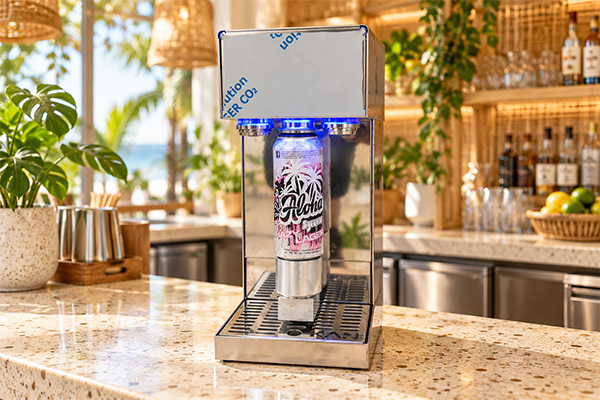
Canning cold brew coffee requires suitable filling and seaming equipment, hygienic handling, oxygen management, and a product-specific plan for food safety, storage, and shelf life. The right setup depends on whether you are packaging still cold brew, nitro coffee, flavored coffee, or a shelf-stable ready-to-drink product. Filling and sealing a can does not, by itself, make cold brew safe for room-temperature storage.
For cafés, coffee roasters, and beverage startups, a compact canning setup can support small-batch production and product testing. Before investing in equipment or launching a canned coffee, define the beverage and its intended storage conditions, confirm equipment compatibility, and establish the processing and safety controls required for your product and market.
This guide covers equipment selection, oxygen management, hygiene, packaging checks, and the decisions to make before scaling up cold brew production.
What Makes Cold Brew Coffee Different From Other Canned Beverages?
Cold brew is generally made by steeping ground coffee in cold or room-temperature water for an extended period, then filtering out the grounds. Iced coffee is usually brewed with hot water and chilled afterward. These extraction methods can produce different chemical and sensory profiles.
A 2024 peer-reviewed study compared refrigerated cold- and hot-brewed coffee and found that sensory quality changed during storage; the study also reported differences between extraction methods. Its results describe the tested bottled coffees and conditions, not a universal shelf-life period for canned products. Use research like this to inform product development, not to assign a best-before date without testing your own product. (Lopane et al., Food Science & Nutrition, 2024)
Cold brew can be packaged in cans, but the required equipment and processing approach depend on the finished beverage, ingredients, packaging, and intended storage conditions.
| Beverage type | Main production considerations | Equipment and process implications |
| Still cold brew | Flavor stability, oxygen exposure, hygiene, and storage temperature | Controlled filling, compatible seaming equipment, and appropriate food-safety controls |
| Nitro cold brew | Nitrogen infusion, gas retention, foam formation, and package requirements | A filling method designed for the product’s gas and pressure requirements |
| Carbonated coffee | Carbonation retention, filling pressure, and foaming | A suitable pressure-balanced filling process may be appropriate |
| Flavored or sweetened cold brew | Ingredient compatibility, contamination risks, and formulation stability | Requirements depend on ingredients and the validated process |
| Dairy-based coffee drink | Dairy handling, microbial control, formulation, and storage | Product-specific processing and refrigeration or other validated preservation controls |
| Shelf-stable canned coffee | Stability and control of relevant microbial hazards | A validated preservation process in addition to suitable filling and seaming equipment |
These categories are not interchangeable. Nitro coffee is not automatically shelf-stable because nitrogen is used, and a can or filling system intended for carbonated drinks is not automatically appropriate for every cold brew recipe.
What Equipment Do You Need to Can Cold Brew Coffee?
A small-scale canning operation may need brewing and filtration equipment, a suitable filling system, a can seamer, sanitation provisions, inspection tools, and appropriate storage. The exact setup depends on product formulation, production volume, packaging format, and food-safety requirements.
Brewing and filtration equipment
Use a repeatable brewing process and record relevant variables, such as the coffee-to-water ratio, extraction time, water temperature, and filtration method. Consistent preparation makes it easier to investigate changes in flavor or product quality from batch to batch.
Filtration removes coffee grounds and suspended particles; it should not be treated as sterilization. The beverage still needs hygienic handling and a safety approach appropriate to its ingredients and intended storage conditions.
Filling equipment
The filling system should suit the beverage’s viscosity, gas content, target fill volume, can format, and oxygen-management requirements.
For still cold brew, a producer may prioritize controlled filling and reduced splashing. For carbonated coffee, pressure-balanced filling can help limit excessive foaming and retain carbonation. The best method depends on the beverage and the manufacturer’s guidance.
Eazy Canning’s FENIX beverage can filling head is designed for counter-pressure filling, primarily for carbonated drinks. Its published specifications list operation at up to 4 bar and compatibility with standard 202-diameter cans, with custom options available upon request. FENIX’s published specifications also list 3–4 cans per minute per head and 100–150 cans per hour for a dual-head configuration. These are manufacturer-published figures, not a guarantee of sustained output for every beverage or setup; confirm the expected rate and suitability for your specific cold brew process with Eazy Canning.
Before selecting FENIX for still or nitro cold brew, discuss the product’s formulation, gas content, target fill, and process with the manufacturer. A filling machine is not a substitute for pasteurization, sterilization, or another validated preservation process.
Can seaming equipment
After filling, the can must be closed using compatible ends and correctly configured seaming equipment.
Eazy Canning’s iKAN can seamer is a compact manual seaming machine. Its published specifications list capacity of up to 10 cans per minute and supported can capacities of approximately 200–1,000 ml. The manufacturer also describes compatibility across can diameters designated 200–209. Confirm the exact can body, end, tooling, and format designation before production; the published ranges do not guarantee every possible can and end combination is supported.
A filling head and a seamer can provide the core equipment for in-house packaging, but producers must also plan for sanitation, inspections, storage controls, and any product-specific processing requirements.
How Can You Reduce Oxygen Exposure During Cold Brew Filling?
Oxygen exposure during filling and storage can contribute to changes in coffee flavor and aroma. The effect depends on the coffee, process, package, storage conditions, and time. Oxygen management can help preserve quality, but it is only one part of a broader packaging and food-safety plan.
Use a controlled filling method. Reduce unnecessary splashing and agitation during transfers, and select a method appropriate for the beverage’s gas content.
Limit exposure between preparation and packaging. Keep the time between filtration and filling controlled, and avoid leaving large batches exposed to air longer than necessary.
Use an appropriate closure system. A correctly formed seam helps protect package integrity and limit unwanted ingress. It does not remove dissolved oxygen, prove that the product is safe, or guarantee a specific shelf life.
Validate any gas purge. Nitrogen or carbon dioxide may be used in some beverage packaging workflows. The gas and operating conditions should suit the product, and purging should not be assumed to remove all oxygen or control microbial hazards.
Evaluate quality over time. Assess the finished beverage under the storage conditions you intend to use. Taste immediately after filling is not enough to predict long-term flavor stability.
What is counter-pressure filling?
Counter-pressure filling balances pressure between the can and beverage system during filling. It is particularly useful for carbonated beverages because it can help limit foaming and loss of carbonation.
For cold brew, the appropriate filling method depends on whether the product is still, nitrogen-infused, or carbonated. A counter-pressure system may suit some applications, but confirm its suitability for the exact recipe, gas conditions, and packaging process with the equipment manufacturer.
Why Do Hygiene and Sanitation Matter When Canning Cold Brew?
Cold brew is commonly extracted without the hot-water brewing step used for conventional hot coffee. Producers should not rely on brewing heat as a microbial control. Contamination can occur during steeping, filtration, equipment handling, transfer, filling, or storage.
A clean workspace and a well-formed can seam are important, but neither proves that the drink is safe. A practical hygiene plan should address:
- Cleaning and sanitizing product-contact equipment according to validated or otherwise appropriate procedures.
- Using suitable water and maintaining clean brewing and filtration systems.
- Preventing cross-contamination during transfer and filling.
- Controlling product time and temperature during preparation, packaging, and storage.
- Documenting production batches, checks, deviations, and corrective actions.
- Following applicable food-safety requirements for the product and market.
Eazy Canning lists FENIX as compatible with Clean-In-Place (CIP) systems. CIP compatibility can support cleaning, but it does not mean every part of the complete production setup is automatically sanitary or that no additional cleaning procedures are needed.
Cleaning removes soil and residues; sanitizing reduces microorganisms on appropriately cleaned surfaces. Neither should be confused with a validated process for making a low-acid beverage shelf-stable.
Does Canned Cold Brew Coffee Need Refrigeration?
There is no single storage rule or shelf-life period that applies to every canned cold brew. Requirements depend on the actual formulation, processing method, package, intended distribution conditions, and applicable regulations. Decide whether the product will be refrigerated or intended for room-temperature storage before finalizing your production process.
Coffee pH varies by recipe and process, so it should be measured for the specific product rather than assumed. Under U.S. FDA regulations, low-acid canned foods generally have a finished equilibrium pH above 4.6 and water activity above 0.85, subject to the regulatory definitions and exclusions. Many ordinary coffee beverages can fall within the low-acid range, making product-specific assessment important. See the FDA’s guidance on acidified and low-acid canned foods.
For shelf-stable low-acid foods packaged in hermetically sealed containers and sold in the United States, commercial processors may have establishment registration and scheduled-process filing obligations. Requirements differ by product and market, so do not assume the U.S. rules apply unchanged elsewhere.
| Product plan | What must be established |
| Fresh cold brew for immediate service | Appropriate hygienic preparation, handling, and service procedures |
| Refrigerated canned cold brew | A product-specific safety approach, defined temperature controls, and a justified storage period under applicable rules |
| Shelf-stable canned cold brew | A validated preservation process suitable for the exact formulation, package, and intended storage conditions |
| Nitro or flavored canned coffee | The same fundamental safety assessment, plus controls required by added ingredients and gas handling |
Refrigeration does not automatically make every process safe, and a tight seam does not make a product shelf-stable. Before commercial production, consult the relevant food-safety authority or a qualified process specialist to establish the controls required for your product.
Do not assign a best-before date based only on taste tests, a successful packaging trial, or the fact that cans remain sealed.
When is specialized processing required?
A beverage intended for ambient storage may require a validated preservation method, such as a suitable thermal process or another process established for the exact formulation and package. Formulation changes, including acidification, also require technical assessment and validation; do not assume that changing pH alone makes a product safe.
Work with a qualified process authority or food-safety specialist to determine the process, records, and controls required in the market where the beverage will be sold. This article is general production guidance, not a validated processing schedule or a substitute for regulatory advice.
How Do You Protect Cold Brew Quality After Seaming?
Seaming mechanically joins the can body and its end to create a closure commonly called a double seam. A properly formed seam is essential for package integrity, but it must be checked using the relevant can-end specifications, equipment instructions, and inspection procedures.
| Quality checkpoint | What to monitor | Why it matters |
| Fill consistency | Fill level or product weight | Helps maintain consistent portions and packaging |
| Seam quality | Required seam measurements and inspection results | Helps verify closure integrity against applicable specifications |
| Leaks and damage | Leaks, dents, damaged ends, or other package defects | Helps identify compromised packages |
| Product quality | Flavor, aroma, color, and other relevant attributes | Helps identify unwanted changes during storage |
| Storage conditions | Temperature and handling records | Helps establish whether the product remained under intended conditions |
| Traceability | Batch codes and production records | Supports investigation and corrective action if an issue occurs |
Visual inspection can reveal some obvious defects, but it does not replace the seam checks required by the applicable packaging specifications. Operators should follow the machine and can-end manufacturer’s procedures and obtain qualified support where needed.
Assess the finished package as one part of the overall process—not as the only measure of product quality or safety.
A Practical Workflow for a Small Cold Brew Producer
Consider a coffee roaster preparing a 100-can pilot batch of a new cold brew. The aim is to evaluate the packaging workflow and collect production data, not to establish commercial shelf life simply by sealing 100 cans.
Step 1: Define the product and intended storage
Record the recipe, ingredients, target can size, distribution channel, and whether the product is refrigerated or intended for ambient storage. Establish the relevant food-safety requirements before selling it.
Step 2: Prepare and filter the coffee
Follow documented brewing and filtration procedures. Record batch details and handle the beverage according to the established hygiene plan.
Step 3: Verify the filling setup
Confirm that the can format fits the filling system and that the method is suitable for the beverage. If considering FENIX, discuss the specific still, nitro, or carbonated coffee process with Eazy Canning.
Step 4: Fill and seam a representative batch
Use compatible cans and ends, follow the equipment instructions, and monitor fill consistency and seam quality. Do not use a successful equipment trial as proof that the beverage is safe for storage.
Step 5: Record operational results
Document the number of cans produced, time required, rejected packages, interruptions, and inspection results. Record the configuration and conditions so later batches can be compared.
Step 6: Evaluate quality and safety separately
Sensory checks can help assess flavor, but they do not establish microbiological safety. Use appropriate testing and validation for the intended storage conditions.
Step 7: Review before scaling
Assess whether the workflow is repeatable, whether the equipment meets the production target, and whether the required food-safety and storage controls have been established. Resolve outstanding issues before increasing production.
This approach helps small producers evaluate packaging and operational performance without confusing a successful pilot run with proof of shelf stability.
When Does Eazy Canning Equipment Make Sense for Cold Brew?
Eazy Canning’s equipment is designed for compact filling and seaming workflows rather than fully automated industrial lines. Suitability depends on the product, the intended process, production needs, and the exact packaging format.
The FENIX filling head uses counter-pressure filling and is primarily presented for carbonated drinks. Its suitability for still or nitrogen-infused cold brew should be confirmed with the manufacturer before purchase.
The iKAN can seamer closes compatible cans with a double seam. It can support a repeatable seaming process when configured for the selected can and end, but it is not a beverage pasteurization or sterilization system.
Together, these machines may suit small-batch operations when their specifications match the producer’s requirements. The overall production plan must also address hygiene, quality checks, storage controls, and any required preservation steps.
For a broader introduction to the business workflow, read Eazy Canning’s Café Owner’s Guide to Canning Coffee. This article focuses specifically on equipment, packaging quality, and technical decisions that affect cold brew after it is canned.
Frequently Asked Questions
Can you can cold brew coffee at home or in a small café?
Small-scale canning may be possible with suitable equipment and an appropriate process. However, producers must account for hygiene, package compatibility, storage, and applicable food-safety requirements. A sealed can is not automatically safe for extended storage.
Does cold brew coffee need to be pasteurized before canning?
There is no single preservation method for every product. The appropriate process depends on the formulation, intended storage conditions, and applicable rules. A qualified process specialist should establish the necessary controls, especially for coffee intended to be shelf-stable.
Does a good can seam prevent oxidation?
An intact seam helps protect package integrity and limit unwanted air ingress, but it cannot guarantee that no oxygen was present before closure. Filling conditions, dissolved oxygen, headspace, and storage can all affect product quality.
Is counter-pressure filling necessary for cold brew?
Not always. Counter-pressure filling is particularly useful for carbonated beverages. For still or nitrogen-infused cold brew, the correct method depends on the product and equipment configuration. Confirm suitability with the manufacturer.
Can nitro cold brew be stored at room temperature?
Nitrogen infusion does not establish shelf stability. The product needs an appropriate, validated safety and storage approach based on its formulation, packaging, and intended distribution conditions.
How long does canned cold brew coffee last?
There is no reliable shelf-life period that applies to every canned cold brew. Storage life depends on formulation, processing, hygiene, package integrity, and storage conditions. Establish both safety and quality through a product-specific validation plan rather than relying only on taste or visual checks.
What equipment is needed to can cold brew commercially?
A typical setup may include brewing and filtration equipment, a suitable filling system, a can seamer, sanitation provisions, inspection tools, and appropriate storage. Additional processing equipment may be required depending on the beverage and its intended shelf life.
Can I use FENIX for still or nitro cold brew?
FENIX is designed for counter-pressure filling and is primarily marketed for carbonated drinks. Its suitability for still or nitrogen-infused cold brew depends on the product and process. Confirm the intended application with Eazy Canning before selecting the equipment.
Concluding
Successful cold brew canning requires a coordinated approach to filling, oxygen management, hygiene, seam integrity, and storage. Choosing the right equipment matters, but equipment alone does not establish product safety or shelf life.
For small producers, Eazy Canning’s FENIX filling head and iKAN can seamer can provide components of a compact canning workflow when their specifications suit the beverage and package. Producers must also establish the required food-safety process, verify packaging quality, and validate storage conditions before commercial distribution.
Start by defining how the coffee will be stored and sold. Then select compatible equipment, document the production process, and validate the product for its intended market. This creates a more dependable foundation for consistent cold brew quality and responsible commercial growth.
